
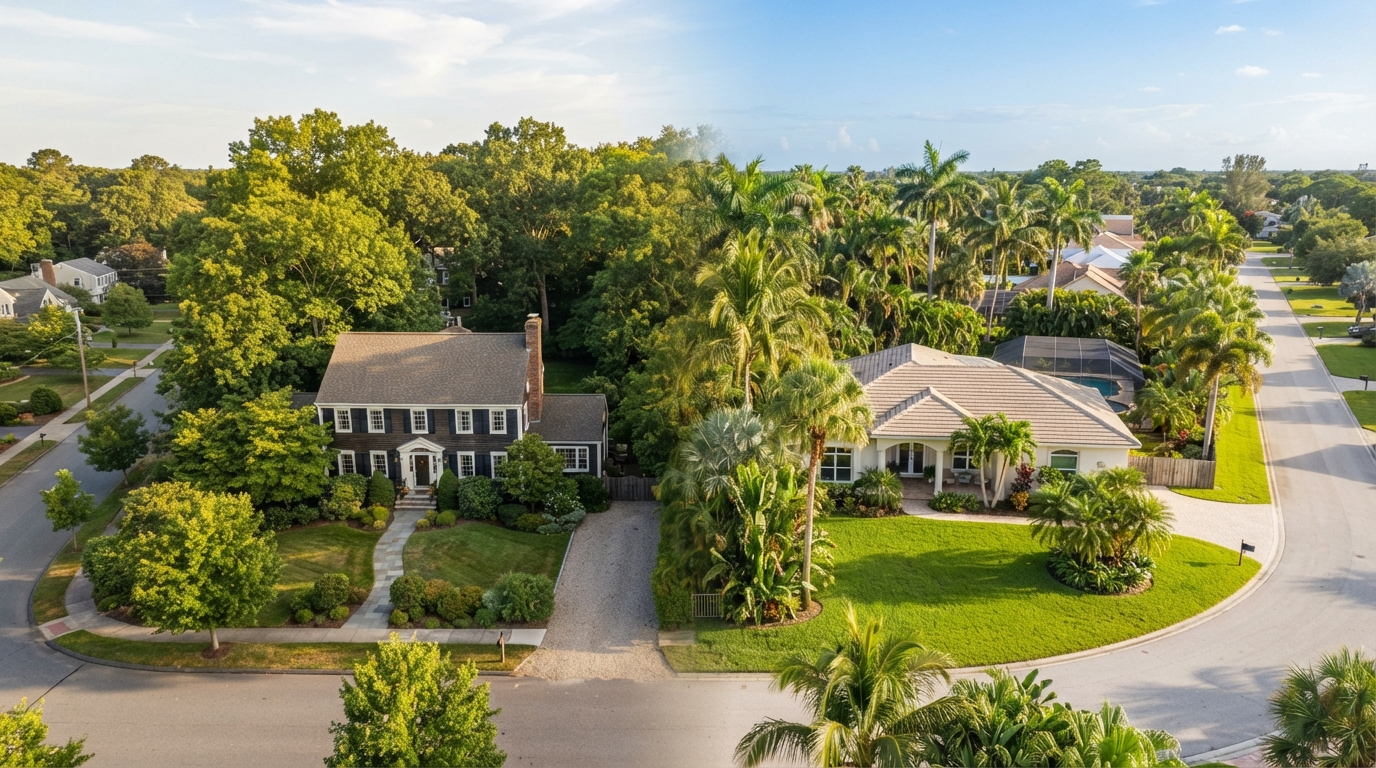
Each year, families and retirees move from Connecticut to Florida seeking warmer weather, lower taxes, a simpler lifestyle, or a home that better fits their next chapter. Polk County has become a popular destination because it offers single-level homes, golf communities, lakefront living, and 55-plus neighborhoods at prices that are often more approachable than coastal Florida markets.
But a cross-state move is not just a change of address. It involves timing the sale of a Connecticut home, navigating Florida insurance and HOA rules, understanding tax differences, deciding whether to buy before selling, and choosing a community that fits your lifestyle. This guide brings together the key decisions in one place so you can plan with confidence.
Why Families Move From Connecticut to Polk County
Polk County sits in central Florida, about an hour from Tampa and Orlando. It includes communities like Lakeland, Winter Haven, Auburndale, and Haines City. The area attracts Connecticut relocators for several reasons: warmer year-round weather, no state income tax, lower property taxes in many cases, and a wide selection of ranch-style and single-level homes that work well for buyers planning to age in place.
Many Connecticut homeowners who relocate are downsizers, empty nesters, or seniors planning their next move. The appeal of a smaller, single-level home in a community with amenities like golf, lakes, or organized activities is strong. Polk County also offers 55-plus communities that provide a low-maintenance lifestyle without the higher price tags found in South Florida.
Families also relocate for work, to be closer to relatives, or because they have vacationed in central Florida and decided to make it permanent. Whatever the reason, the move works best when the timing, finances, and housing choices are planned together rather than handled one at a time.
Should You Sell Your Connecticut Home First or Buy in Florida First?
This is the most common question Connecticut relocators face. The answer depends on your finances, your comfort with carrying two properties, and the market conditions in both states. There is no single right answer, but there is a right answer for your situation.
Selling first gives you a clear budget for your Florida purchase and eliminates the stress of maintaining two homes. But it may require a temporary rental or staying with family between the sale and the Florida closing. Buying first lets you move directly into your new home, but it requires enough income or savings to carry both properties, and it may involve a bridge loan or HELOC to bridge the gap.
Some Connecticut sellers explore a sell-and-stay arrangement, where they sell the home but remain in it for a period of time through a rent-back agreement. Others use an trade-in program that lets them purchase a new home while their current home is being sold. Each option has trade-offs, and the best choice depends on your timeline, equity, and tolerance for complexity.
Understanding the Tax Differences Between Connecticut and Florida
Florida has no state income tax, which is one of the most significant financial differences for relocators. Connecticut residents pay state income tax, so moving to Florida can reduce your annual tax burden, particularly if you are retired or have investment income. However, establishing Florida residency requires more than buying a home. You may need to update your driver's license, voter registration, vehicle registration, and mailing address, and you should consult a tax professional about domicile rules and any capital gains or timing considerations.
Florida property taxes are generally lower than Connecticut's, but they vary by county, city, and whether the property qualifies for a homestead exemption. The homestead exemption can reduce the assessed value of your primary residence, which lowers your property tax bill. You must be a Florida resident and the home must be your primary residence to qualify.
This guide does not provide tax or legal advice. Tax laws change, and individual situations vary widely. Before making a move, speak with a qualified tax professional or attorney who understands both Connecticut and Florida tax rules.
Florida Homeowners Insurance and What Connecticut Buyers Need to Research
Insurance is one of the biggest differences Connecticut buyers encounter when purchasing a home in Florida. Florida's insurance market is more complex than Connecticut's, and premiums can be significantly higher, especially in areas near the coast or in flood zones.
Before purchasing a home in Polk County, buyers should research insurance availability and cost. Roof age is a major factor in Florida insurance. Many insurers will not write a policy or will charge substantially more if the roof is older than 15 to 20 years. HVAC condition, construction type, and proximity to flood zones also affect coverage and cost. A HOA review may also reveal insurance costs bundled into association fees.
Flood insurance is separate from standard homeowners insurance and may be required if the property is in a designated flood zone. Even if flood insurance is not required, some buyers choose to purchase it for peace of mind. An insurance professional can explain current coverage requirements and options for your specific property.
Choosing the Right Polk County Community
Polk County offers a range of community types, and the right choice depends on your lifestyle, budget, and long-term plans. Lakeland is the largest city in the county, with a historic downtown, lakes, and a mix of housing styles. Winter Haven is known for its chain of lakes and a growing downtown area. Auburndale and Haines City offer smaller-community feels with access to the same regional amenities.
If you are downsizing or planning a senior transition, ranch and single-level homes are popular because they reduce stairs and maintenance. Golf communities offer organized amenities and social activity, while lakefront homes provide water access and scenic views.
For buyers age 55 and older, 55-plus communities offer low-maintenance living with amenities designed for active adults. These communities often include lawn care, clubhouses, fitness centers, and organized social events. HOA fees and rules vary, so it is important to review the community's documents before making an offer.
Preparing Your Connecticut Home for Sale Before Relocating
Selling a Connecticut home before or during a relocation requires preparation. Many Connecticut homes are older and may have systems that buyers will scrutinize. If your home has a septic system or private well, having it inspected and pumped before listing can prevent last-minute negotiation issues.
Deciding whether to stage or sell as-is depends on the home's condition, your timeline, and the local market. Some sellers choose to make strategic repairs that increase value, while others prefer a cash offer or fix-and-list option that reduces preparation time.
If you have lived in the home for decades, the emotional side of selling can be just as significant as the financial side. Downsizing from a longtime home involves sorting belongings, memories, and family decisions. Taking the process one step at a time can reduce the feeling of being overwhelmed.
Remote Home Searches: Buying in Florida From Connecticut
Many Connecticut relocators begin their Florida home search remotely. You can explore available Polk County homes through the Florida property search page, which connects to live MLS listings. This lets you narrow down neighborhoods, price ranges, and home styles before traveling to Florida for in-person tours.
A remote search works best when you have a clear picture of your priorities: community type, home size, single-level requirement, budget, and must-have features. A relocation consultation can help you organize these priorities and create a plan for touring homes when you visit Polk County.
When you find a home you are interested in, it is important to review the HOA documents, insurance history, roof age, and any inspection findings carefully. A home inspection is just as important in Florida as in Connecticut, and the inspection may reveal issues specific to Florida construction, such as sinkhole history, termite damage, or HVAC age.
Downsizing and Senior Transition Considerations
For many Connecticut relocators, the move to Florida is also a downsizing move. A larger colonial home with multiple floors no longer fits, and a smaller, single-level home in a planned community becomes more appealing. Downsizing guidance can help you decide what to keep, what to sell, and how to time the transition.
If you are helping a parent or family member with the move, senior transition support can make the process calmer and more organized. Families often need help coordinating the sale, the cleanout, the Florida purchase, and the timing of the physical move.
Some families also face the added complexity of an inherited property or probate situation in Connecticut while planning a Florida relocation. In those cases, legal and estate professionals should be consulted before the real estate process begins.
A Realtor's Take
When I help a family move from Connecticut to Florida, the first conversation is rarely about a specific house. It is about timing. Do they need to sell before buying? Can they carry two homes for a short period? Are they moving for retirement, a job, or to be closer to family? Once we understand the timeline, the housing decisions become clearer. I have found that the most successful relocations happen when the Connecticut sale and the Florida purchase are planned together, not as separate events. That might mean using a rent-back to stay in the Connecticut home a few extra weeks while the Florida closing is finalized, or it might mean starting the Florida search remotely and traveling once for a focused tour week. The goal is to reduce pressure and give the family time to make good decisions rather than rushed ones.
Frequently Asked Questions
How long does a Connecticut to Florida relocation typically take?
The timeline depends on whether you sell first or buy first, how quickly your Connecticut home sells, and how long it takes to find and close on a Florida home. A typical relocation may take 3 to 6 months, but some families plan over a year to avoid rushing decisions.
Can I buy a home in Florida before selling my Connecticut home?
Yes, if your finances allow you to carry both properties or if you qualify for a bridge loan or HELOC. Buying first lets you move directly into your new home, but it requires careful financial planning. A lender can review your options.
Does Florida have a state income tax?
No. Florida does not have a state income tax. However, establishing Florida residency for tax purposes requires steps beyond purchasing a home. Consult a tax professional about domicile rules and how they apply to your situation.
Is homeowners insurance more expensive in Florida than Connecticut?
Florida insurance can be significantly more expensive, especially if the home has an older roof or is near a flood zone. Roof age is a major factor. Buyers should research insurance availability and cost before making an offer.
What is a 55-plus community and is it right for me?
A 55-plus community is a residential development designed for residents age 55 and older. These communities often include amenities like clubhouses, fitness centers, and organized activities. HOA fees and rules vary, so review the community documents before deciding.
Can Melinda help with both the Connecticut sale and the Florida purchase?
Yes. Melinda is licensed in both Connecticut and Florida and can help coordinate the timing, preparation, and execution of both transactions. A relocation consultation is the best place to start.
Does this guide provide tax or legal advice?
No. This guide provides real estate guidance only. Tax laws, estate planning, and legal questions should be reviewed with qualified professionals who understand both Connecticut and Florida rules.
