











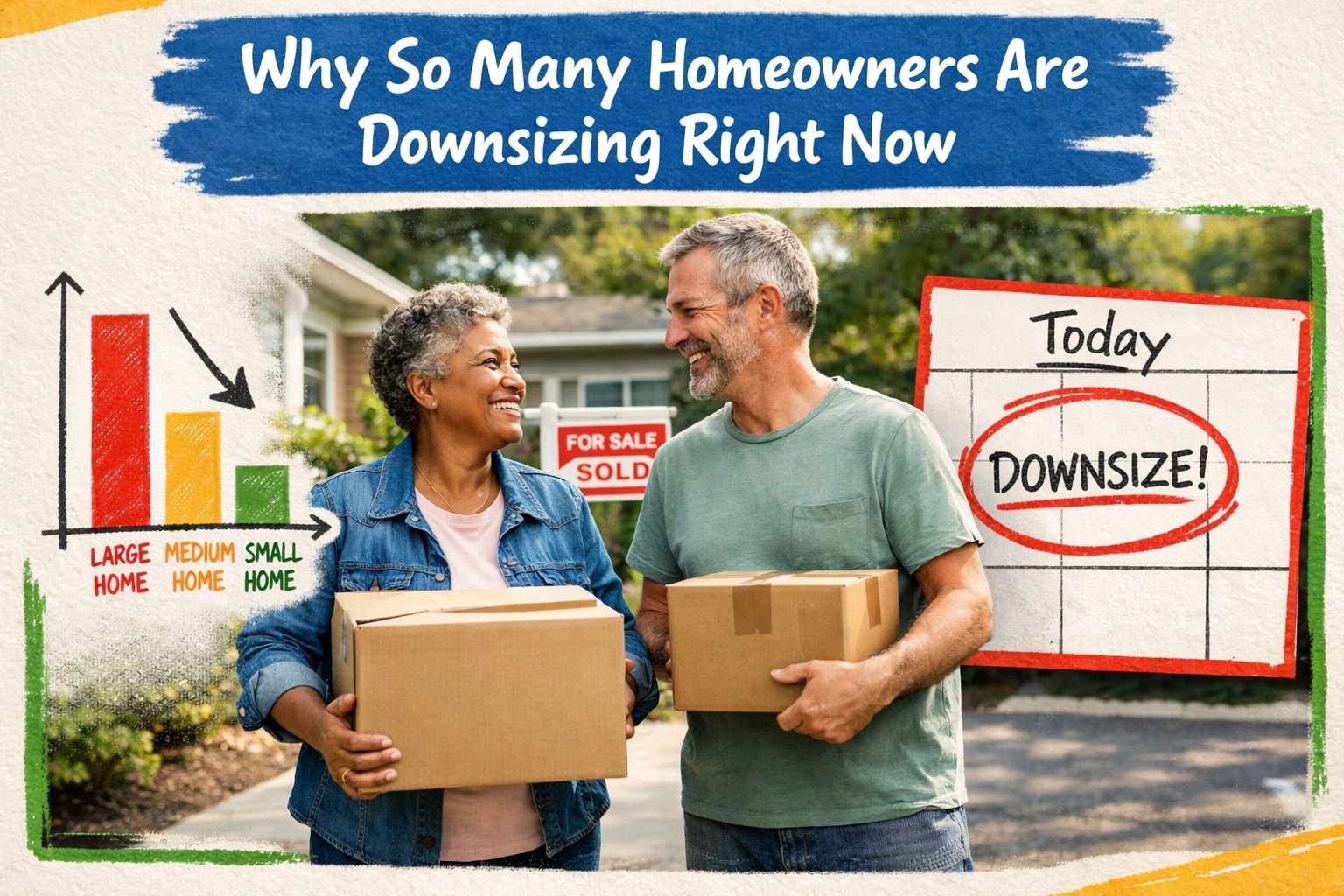
Why So Many Homeowners Are Downsizing Right Now
For a growing number of homeowners, retirement isn't some distant idea anymore. It's starting to feel very real.
According to Realtor.com and the Census, nearly 12,000 people will turn 65 every day for the next two years. And the latest data shows as many as 15% of those older Americans are planning to retire in 2026. Another 23% will do the same in 2027.
If you're considering retiring soon too, here's what you should be thinking about.
Why Downsize?
Now's the perfect time to reflect on what you want your life to look like in retirement. Because even though your finances will be going through a big change, you don't necessarily want to feel like you're living with less.
But odds are, what you do want is for life to feel easier.
Easier to enjoy.
Easier to manage.
Easier to maintain day-to-day.

Downsizing isn't about giving up the life you've built. It's about reshaping it to fit who you are now, not who you were twenty years ago. When the kids move out and those extra bedrooms sit empty, when maintaining a large yard feels more like a burden than a joy, it's natural to wonder if there's a better fit for your lifestyle.
The truth is, your home should work for you, not the other way around. And for many Connecticut homeowners entering retirement, that means making a strategic move toward simplicity and freedom.
The Top Reasons People Over 60 Move
You can see these benefits show up in the data when you look at why people over 60 are moving. The National Association of Realtors (NAR) finds the top four reasons aren't about timing the market or chasing top dollar. They're about lifestyle:
Being closer to children, grandchildren, or long-time friends so it's easier to spend more time with the people who matter most. When family gatherings don't require a three-hour drive, you get more spontaneous visits, more Sunday dinners, and more of those everyday moments that add up to a life well-lived.
Wanting a smaller, more functional home with fewer stairs and easier upkeep. Single-level living makes daily life simpler and safer. No more worrying about navigating stairs with laundry baskets or groceries. Plus, less square footage means less time spent cleaning, maintaining, and repairing.
Retiring and no longer needing to live near the office, so it's easier to move wherever you want. Maybe you've always dreamed of being closer to the coast, or perhaps you want to relocate to a quieter Connecticut town like Pomfret or Woodstock where the pace is slower and the community is tight-knit.
Opting for something smaller to reduce monthly expenses tied to utilities, insurance, and maintenance. Heating and cooling costs drop dramatically in a smaller space. Property taxes are often lower. And when something breaks, the repair bill isn't quite as painful.

No matter the reason, the theme is the same: downsizing isn't about giving something up. It's about gaining control and choosing simplicity. And it brings peace of mind to know your home fits the years ahead, not the years behind.
And the best part? It's more financially feasible now than many homeowners would expect.
The Number One Thing Helping So Many Homeowners Downsize
Here's the part that makes it possible. Thanks to how much home values have grown over the years, many longtime homeowners are realizing they're in a stronger position than they thought to make that move.
According to CoreLogic, the average homeowner today has about $299,000 in home equity. And for older Americans, that number is often even higher, simply because they've lived in their homes longer.
When you stay in one place for years (or even decades), two things happen at the same time:
Your home value has time to grow.
Your mortgage balance shrinks or disappears altogether.
That combination creates more options than you'd expect, even in today's market. This equity can help you purchase a more manageable home outright, fund retirement travel, support grandchildren's education, or simply provide a financial cushion that brings peace of mind.
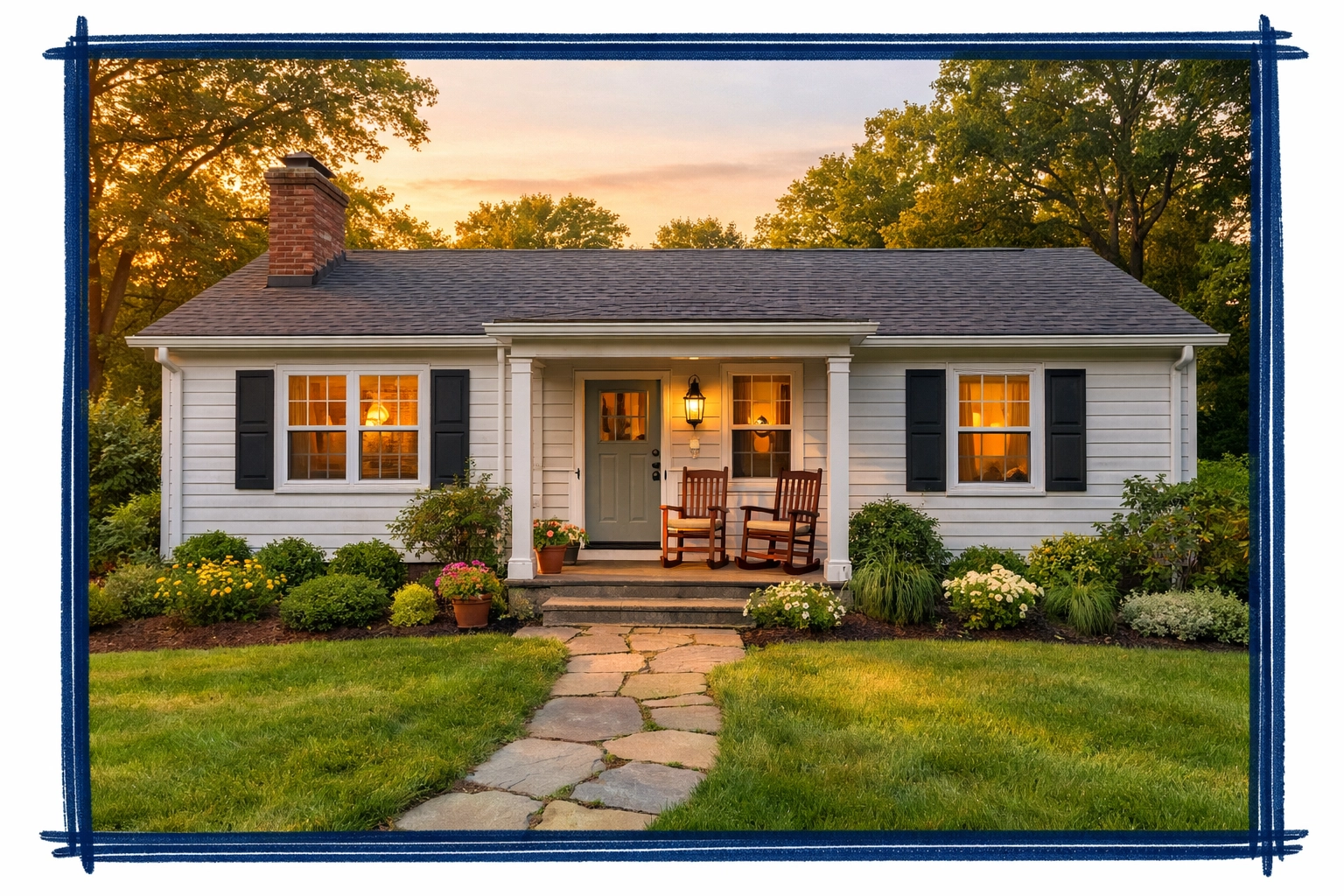
Many homeowners I work with in places like Killingly, Thompson, and Plainfield are surprised to learn how much equity they've built up. They bought their homes decades ago when prices were a fraction of what they are now. Even if they haven't been keeping close tabs on the real estate market, their home has quietly been working for them all these years.
So, whether you just retired, or you're about to, it's not too soon to start thinking about what comes next. Sure, it can be hard to leave the house you made so many years of memories in, but maybe it's time to close one chapter to open a new one that's just as exciting.
How Downsizing in Connecticut Works
If you're wondering what the downsizing process actually looks like, let me break it down. First, we'll start with a no-pressure conversation about your goals. What do you want your next chapter to look like? Where do you want to be? What features matter most in your new home?
Next, I'll help you understand exactly how much equity you have in your current home. This isn't just a Zillow estimate. I'll provide a comprehensive market analysis based on actual sales data in your Connecticut neighborhood, so you know what your home is truly worth.
Then, we'll explore what's available in your target area. Whether you're looking for a ranch-style home in Ashford, a cozy condo in Putnam, or a smaller colonial in Brooklyn, I'll help you find properties that match your lifestyle and budget.

The beauty of downsizing is that you're often in a strong negotiating position. You're not in a rush. You're not desperate. You're making a thoughtful, strategic move, and that puts you in control.
Throughout the entire process, I'll be right there with you. From preparing your current home for sale to coordinating the timing of your move, I handle the details so you can focus on the excitement of what's ahead.
Common Downsizing Questions Answered
One of the biggest concerns I hear is: "What if I regret getting rid of so much stuff?" Here's the thing: most people who downsize tell me they wish they'd done it sooner. The freedom that comes with owning less is something you can't fully appreciate until you experience it.
Another common worry is about losing neighborhood connections. But here's the good news: Connecticut's smaller towns have incredibly welcoming communities. Places like Scotland, Canterbury, and Hampton have active senior centers, community events, and tight-knit neighborhoods where it's easy to make new friends while staying connected to old ones.
Some homeowners also worry about timing. "Should I wait for interest rates to drop?" But here's the reality: if you're buying a smaller home with significant equity from your current property, you might be able to purchase outright or take a much smaller mortgage. That makes interest rates far less of a concern than they'd be for a typical buyer.
Frequently Asked Questions
How long does the downsizing process typically take?
The timeline varies, but most homeowners spend about two to four months from listing their current home to closing on their new property. If you're coordinating both transactions, I'll help structure the timing so you're not stuck paying two mortgages or scrambling for temporary housing.
Will I pay capital gains tax when I sell my home?
Most homeowners won't. If you've lived in your home for at least two of the last five years, you can exclude up to $250,000 in gains if you're single, or $500,000 if you're married and filing jointly, according to IRS guidelines. Always consult with a tax professional for your specific situation.
Should I renovate before selling, or sell as-is?
That depends on your home's condition and your local market. In many Connecticut towns, buyers prefer homes that are clean and well-maintained but don't necessarily need high-end upgrades. I'll walk through your home and give you honest advice about what's worth doing and what's not.
What if I can't find a smaller home I like before I sell my current one?
We have options. Some sellers include a rent-back agreement, allowing them to stay in their home for 30 to 60 days after closing while they find their next place. Others choose temporary housing. I'll help you create a plan that reduces stress and keeps you in control.
How do I decide what to keep and what to let go?
Start by measuring your new space and being realistic about what will fit. Focus on keeping items that serve a purpose or bring you genuine joy. Many families find it meaningful to pass along furniture and keepsakes to children and grandchildren rather than putting everything in storage or selling it.
Bottom Line
Downsizing is about setting yourself up for what comes next, on your terms.
If retirement is on the horizon and you've started wondering what your current house (and your equity) could make possible, the first step isn't selling. It's understanding your options.
Thinking about downsizing but not sure where to start? Call me at 860-985-4363 or visit melindatherealtor.com for a free consultation. Never too busy for you!
A simple, no-pressure conversation can help you see what downsizing might look like and whether it makes sense for you right now. I've helped countless Connecticut homeowners navigate this transition, and I'd love to help you explore what your next chapter could be.
Sources
National Association of Realtors® – Home Buyers and Sellers Generational Trends Report
https://www.nar.realtor/research-and-statistics/research-reports/home-buyers-and-sellers-generational-trendsU.S. Census Bureau – Retirement & Demographic Shift Data
https://www.census.gov/topics/population/older-aging.htmlCoreLogic – Homeowner Equity Insights Report
https://www.corelogic.com/intelligence/homeowner-equity-report/Realtor.com – Housing Trends & Downsizing Research
https://www.realtor.com/research/Internal Revenue Service – Capital Gains Exclusion for Home Sales
https://www.irs.gov/taxtopics/tc701