











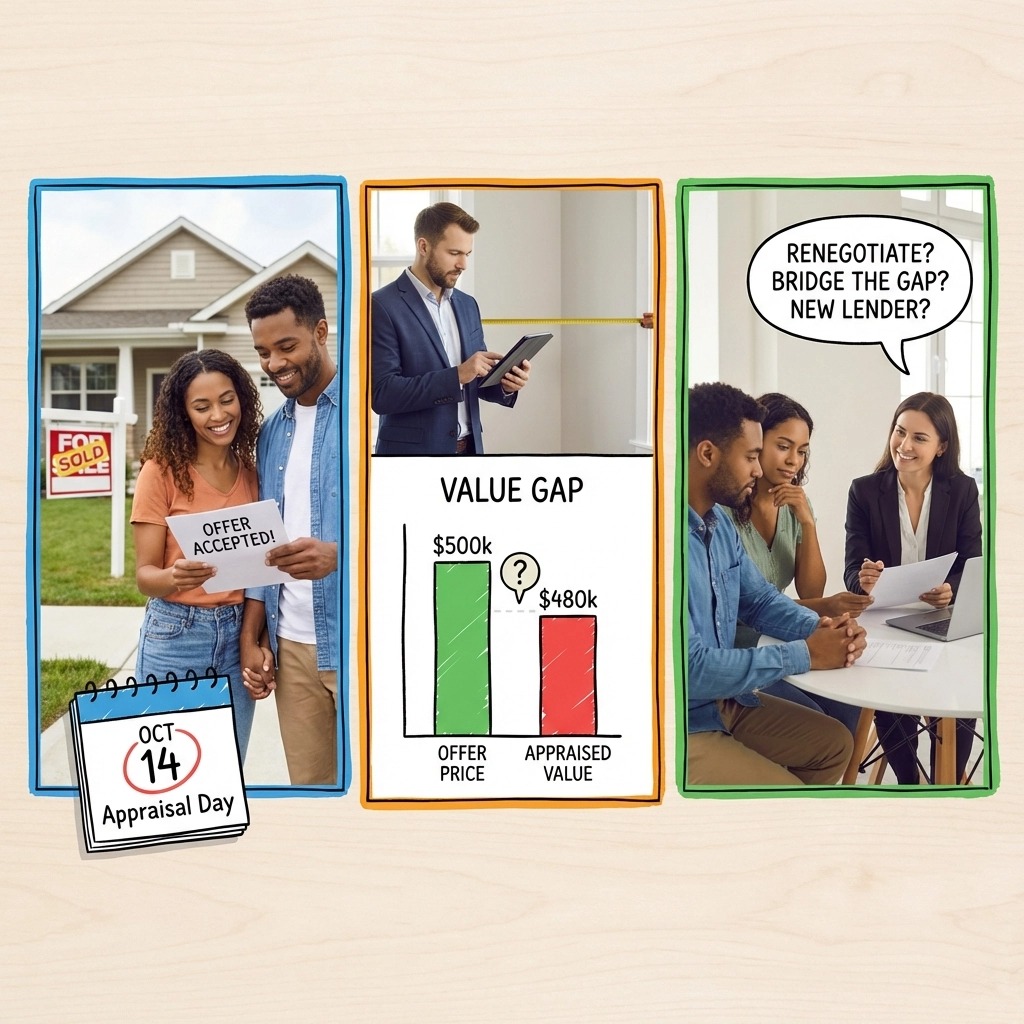
What If My Home Appraises for Less Than Offer?
You've accepted an offer on your Connecticut home. The excitement is real! But then you get the news: the appraisal came in lower than the offer price. Now what?
First, take a breath. This happens more often than you might think. According to a 2024 Zillow survey, 23% of sellers reported at least one offer fell through due to a low appraisal. The good news? A low appraisal doesn't automatically mean your deal is dead. Let's walk through what this means and what you can do about it.
What Is an Appraisal and Why Does It Matter?
Before we dive into solutions, let's make sure we're on the same page about what an appraisal actually is.
When a buyer uses a mortgage to purchase your home, their lender requires an independent appraisal. This is a professional assessment of your home's fair market value conducted by a licensed appraiser. The lender needs to know the property is worth at least what they're lending, since the home serves as collateral for the loan.
Here's the key thing to understand: lenders won't finance more than the appraised value. So if a buyer offers $350,000 but the appraisal comes back at $330,000, the lender will only approve a loan based on that $330,000 figure.
That $20,000 difference? That's called an appraisal gap, and someone needs to figure out how to cover it.

Why Do Appraisals Come in Low?
Understanding why your appraisal came in low can help you decide your next steps. Here are the most common reasons:
Overpricing
Let's be honest. Sometimes homes are simply listed above their true market value. Sellers often have emotional attachments to their properties that can inflate their perception of worth. According to real estate experts, overpricing by the seller is often the leading cause of low appraisals.
Outdated Comparable Sales Data
Appraisers use recent sales of similar homes (called "comps") to determine value. In fast moving markets, the available data might not reflect current conditions. If prices have risen quickly, older comps could drag down your appraised value.
Limited Comparable Sales
If your home is unique, whether due to size, style, location, or features, the appraiser might struggle to find truly comparable properties. This is especially common with historic homes or custom builds in Connecticut.
Property Condition Issues
Sometimes appraisers discover problems that weren't apparent during regular showings. Deferred maintenance, outdated systems, or needed repairs can lower the appraised value.
Appraiser Error
Appraisers are human. They can miss features, use inappropriate comps, or make calculation errors. It happens.
What Happens When Your Appraisal Comes in Low
When the appraisal is lower than the agreed upon purchase price, several things might happen:
The buyer's financing gets complicated. Their lender will only approve a loan up to the appraised value. If the buyer planned to put 10% down on a $350,000 purchase but the home appraises at $330,000, they suddenly need to come up with significantly more cash.
The deal could fall through. Most purchase contracts include an appraisal contingency, which allows buyers to walk away without penalty if the appraisal is too low. This protects buyers from overpaying.
Negotiations restart. Often, both parties want to make the deal work. This means coming back to the table to figure out a solution.

Your Options as a Seller
You have more control here than you might think. Let's look at your choices:
Option 1: Reduce the Price to Match the Appraisal
This is the most straightforward solution. If the appraisal says your home is worth $330,000, you lower your price to $330,000. The buyer's financing goes through, and the deal closes.
When this makes sense: You're motivated to sell, you've had limited interest in the property, or you suspect the appraisal is accurate.
Option 2: Have the Buyer Pay the Difference
The buyer can choose to cover the appraisal gap out of pocket. They'd pay the difference between the appraised value and the offer price in cash at closing, on top of their down payment.
When this works: In competitive markets, buyers with strong cash reserves sometimes agree to this. It's more common when inventory is low and buyers are highly motivated.
Option 3: Meet in the Middle
Perhaps the most common solution is splitting the difference. If there's a $20,000 gap, you might lower your price by $10,000 while the buyer brings an extra $10,000 to closing.
When this makes sense: Both parties want to close the deal and are willing to compromise.
Option 4: Challenge the Appraisal
If you believe the appraisal contains errors or missed important information, you can request an appraisal review. This requires documentation, such as comparable sales the appraiser may have overlooked, recent upgrades that weren't properly noted, or factual errors in the report.
When this makes sense: You have concrete evidence the appraisal is flawed, not just a feeling that your home is worth more.
Option 5: Wait for a New Buyer
You can let this deal fall through and hope the next buyer's appraisal comes in higher. Keep in mind that a different lender's appraiser may value the property differently.
When this makes sense: You're not in a hurry, you believe the market is improving, or you have reason to think this appraisal was unusually low.

Negotiation Tips for Sellers
Here's how to approach negotiations after a low appraisal:
Stay calm and professional. Getting emotional won't help. Treat this as a business problem to solve.
Know your bottom line. Before negotiating, decide the lowest price you're willing to accept. This keeps you from making decisions you'll regret.
Consider the full picture. A slightly lower price might be worth it to avoid months of additional mortgage payments, maintenance, and uncertainty.
Ask about the buyer's situation. Sometimes buyers have more flexibility than they initially let on. Other times, they genuinely can't bridge the gap.
Get creative. Could you offer seller credits instead of a price reduction? Could closing costs be adjusted? Sometimes there are multiple ways to make the numbers work.
How to Reduce Stress During This Process
A low appraisal can feel like a punch to the gut, especially when you thought your deal was almost done. Here's how to keep your cool:
Remember it's not personal. The appraiser doesn't know you or have anything against you. They're just doing their job based on data and professional judgment.
Trust the process. Most deals that hit appraisal issues still close. It just takes some extra negotiation.
Lean on your realtor. This is exactly the kind of situation where having an experienced agent makes all the difference. Your realtor has likely navigated dozens of these situations and can guide you through it.
Keep perspective. In the grand scheme of your home sale, an appraisal gap is usually a speed bump, not a roadblock.
Frequently Asked Questions
Can I choose my own appraiser?
No. The lender selects the appraiser to ensure independence. Neither the buyer nor seller gets to pick who does the appraisal.
How long does an appraisal review take?
Typically one to two weeks, though it can vary. During this time, your deal is essentially on hold.
What if the buyer doesn't have an appraisal contingency?
Without a contingency, the buyer is obligated to proceed even with a low appraisal. They'd need to cover any gap themselves. However, most buyers include this contingency for protection.
Does a low appraisal affect my home's future value?
Not directly. Future appraisals will use new data and market conditions. One low appraisal doesn't permanently label your home.
Should I get my own appraisal before listing?
Some sellers do. A pre listing appraisal can help you price accurately and avoid surprises. Talk to your realtor about whether this makes sense for your situation.
Ready to Navigate Your Home Sale?
Selling a home involves a lot of moving pieces, and unexpected appraisal issues are just one of them. Having an experienced Connecticut realtor in your corner makes all the difference.
Call me at 860-985-4363 or visit melindatherealtor.com for a free consultation. Never too busy for you to be my #1 client.
Whether you're just thinking about selling or you're already dealing with an appraisal challenge, I'm here to help you find the best path forward.
Sources
Zillow Research – Low Appraisal & Contract Fallout Data (2024)
https://www.zillow.com/research/National Association of Realtors® – Appraisal Process & Seller Options
https://www.nar.realtor/appraisal-issuesConsumer Financial Protection Bureau – Understanding Home Appraisals
https://www.consumerfinance.gov/owning-a-home/appraisal/Fannie Mae – Reconsideration of Value (ROV) Guidelines
https://singlefamily.fanniemae.com/originating-underwriting/appraisalConnecticut REALTORS® – Market Data & Appraisal Impact in CT
https://www.ctrealtors.com/market-data/