












What Are Zoning Rules in Connecticut Towns?
If you're buying property in Connecticut, understanding zoning rules isn't just helpful, it's essential. These regulations determine what you can and can't do with your property, from building an addition to starting a home business. Let's break down everything you need to know about Connecticut's zoning landscape.
What Are Zoning Rules and Why Do They Matter?
Zoning rules are local laws that divide municipalities into different districts, each with specific regulations about how land and buildings can be used. Think of them as a city's master plan for organizing different types of development, residential, commercial, and industrial areas.
In Connecticut, these rules affect everything from your property's resale value to whether you can run a daycare from your home. According to the National Association of Realtors, zoning violations can significantly impact property values and marketability.
Zoning Rules in Connecticut
Zoning rules are local regulations that determine how land and buildings can be used within a municipality.
These rules may regulate:
Residential, commercial, or industrial uses
Building size and height
Lot coverage limits
Setback requirements
Home businesses
Accessory structures
Parking requirements
Density and development standards
Because zoning regulations vary from town to town, buyers should always verify local requirements before purchasing a property.

Connecticut's Zoning Legal Framework
Connecticut's zoning authority comes from Chapter 124 of the Connecticut General Statutes, which gives municipalities the power to create and enforce their own zoning codes through local zoning commissions. This state-level legislation ensures uniformity in how zoning works across Connecticut while allowing towns to customize rules for their specific needs.
Each city, town, and borough in Connecticut can establish regulations covering:
Building height, number of stories, and overall size
Percentage of lot area that structures can occupy
Required yard setbacks and open space
Population density limits
Specific uses allowed for buildings and land
Sign and billboard restrictions
How Zoning Districts Work in Connecticut
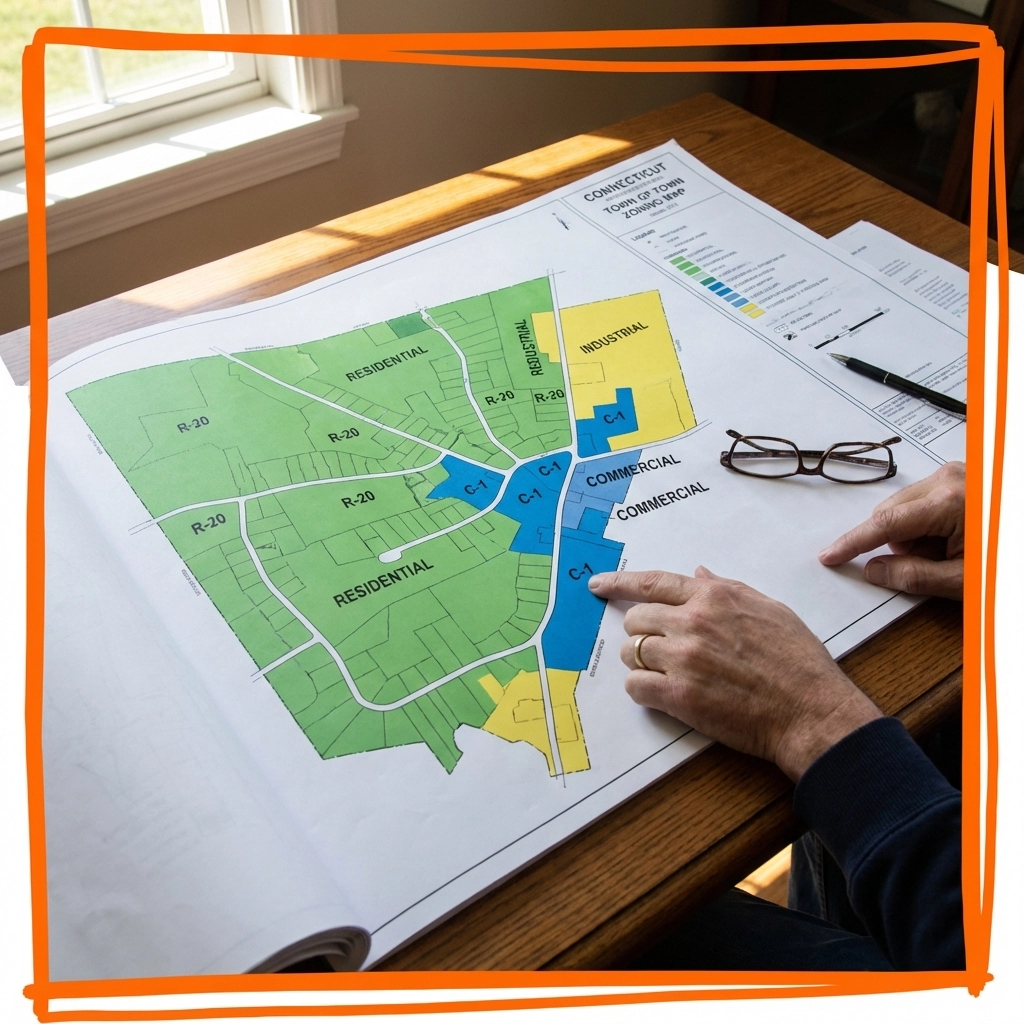
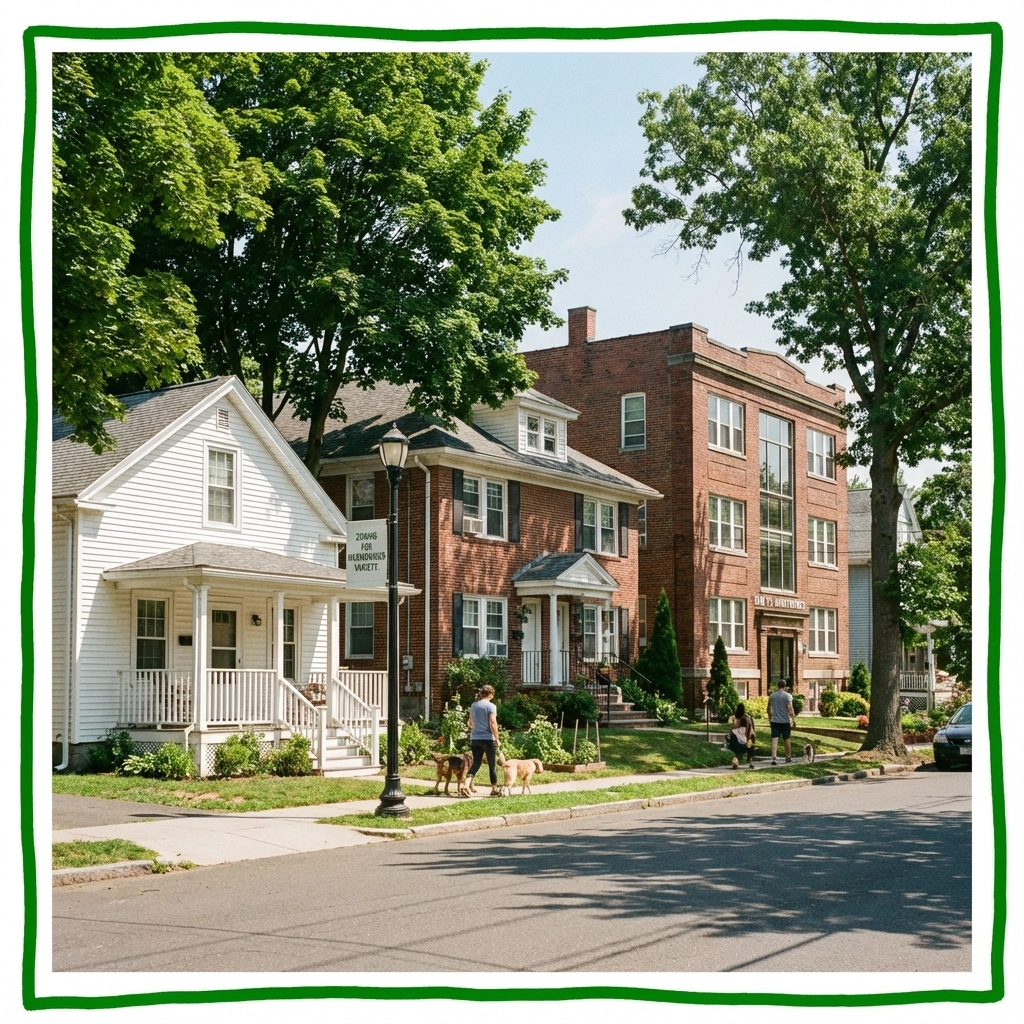
Connecticut municipalities typically divide themselves into several zoning districts, each with distinct rules. While regulations must be uniform within each district, they can vary dramatically between districts in the same town.
Common residential zoning types include:
R-1 (Single-family residential): Typically allows only single-family homes with larger lot requirements
R-2 (Two-family residential): Permits duplexes and sometimes small multi-family buildings
R-3 (Multi-family residential): Allows apartment buildings and higher-density housing
Commercial and mixed-use zones might permit retail stores, offices, restaurants, and sometimes residential units above commercial spaces.
The key principle is uniformity, if your neighbor's property is in the same zoning district as yours, the same rules apply to both properties.
What Zoning Commissions Can Regulate
Connecticut zoning commissions have broad authority to regulate development, but they must follow specific guidelines.
According to Chapter 124, commissions can control:
Building specifications: Height limits, structural requirements, and architectural standards that maintain neighborhood character.
Land use intensity: How much of your property you can build on, ensuring adequate green space and preventing overcrowding.
Setback requirements: Minimum distances buildings must be from property lines, roads, and other structures.
Parking and access: Required parking spaces and traffic flow considerations.
Environmental protections: Regulations protecting wetlands, flood zones, and other environmentally sensitive areas.
Purpose Behind Connecticut's Zoning Regulations
Connecticut's zoning laws serve several important public purposes:
Safety and health: Preventing dangerous building configurations and ensuring adequate emergency access
Traffic management: Reducing street congestion through thoughtful development planning
Infrastructure support: Ensuring developments don't overwhelm water, sewer, and school systems
Property value protection: Maintaining neighborhood character and preventing incompatible land uses
According to the U.S. Census Bureau, well-planned zoning contributes to stable property values and community satisfaction.
How Zoning Changes Are Made
Zoning regulations aren't set in stone. Changes require a majority vote of all zoning commission members and must consider the municipality's plan of conservation and development.
The process typically involves:
Application submission with detailed proposals
Public hearings for community input
Commission review and voting
Filing and publication requirements before changes take effect
This process ensures transparency while allowing communities to adapt to changing needs.
Researching Zoning Before You Buy
Before purchasing property in Connecticut, always research its zoning designation.
Here's how:
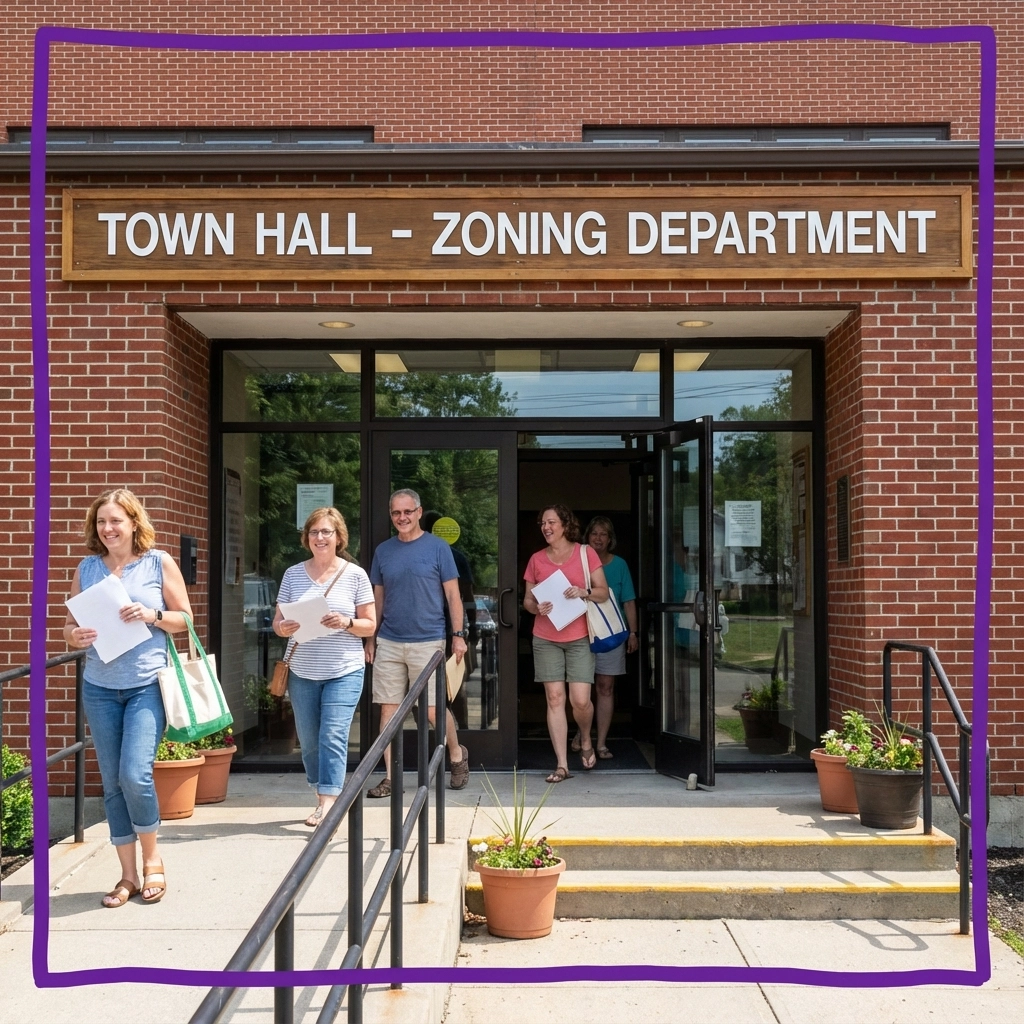
Contact the local zoning office directly, most towns have this information readily available and staff who can explain current regulations.
Review the town's zoning map (usually available online) to understand your property's district and surrounding areas.
Check for pending changes that might affect your intended use of the property.
Consider future development in nearby areas that could impact your property's value or quality of life.
Many Connecticut towns now offer online zoning information, making research more convenient than ever. Buyers should also understand how much money you need to buy a home in Connecticut before evaluating specific properties and neighborhoods. Many buyers researching zoning regulations may also qualify for Connecticut first-time homebuyer programs that help reduce upfront costs.
Questions to Ask Before Buying Property
Before purchasing a property, consider asking:
What zoning district is the property located in?
Are there pending zoning changes nearby?
Can I build additions or accessory structures?
Are home businesses permitted?
Are there wetlands or environmental restrictions?
What future development is planned nearby?
These questions can help avoid surprises after closing.
Impact on Property Values and Investment
Zoning significantly affects property values in Connecticut. Properties in desirable residential zones typically maintain higher values, while those near commercial or industrial areas may face different market dynamics. Reviewing Connecticut real estate market trends for 2026 can provide additional insight into how location and zoning influence buyer demand.
Understanding how much a Connecticut home is worth can help buyers and investors evaluate how zoning may affect long-term property value.
Positive zoning factors include stable residential neighborhoods, good school districts, and protection from incompatible development.
Many buyers also monitor whether Connecticut home prices are dropping or slowing down when evaluating future property values. Understanding how interest rates affect Connecticut home prices can provide additional context when evaluating zoning-related investment opportunities.
Potential concerns might include properties near major commercial developments, areas zoned for potential rezoning, or districts with very restrictive building requirements.
Understanding zoning helps you make informed decisions about both your home purchase and long-term investment strategy. Many buyers researching the best places to live in Connecticut also compare zoning regulations, schools, and future development plans.
Reach out to me today! Call me at 860-784-7214 for a free consultation. Never too busy for you to be my #1 client!
Working with Zoning Requirements
If you're planning modifications to your Connecticut property, understanding zoning requirements early saves time and money.
Common scenarios include:
Home additions: Must comply with setback requirements and lot coverage limits
Home businesses: May require special permits depending on the type and scale of business
Accessory structures: Sheds, garages, and pools have specific size and placement requirements
Subdividing property: Complex process requiring detailed review and approval
Always check with your local zoning office before beginning any significant property modifications. Zoning restrictions and permit requirements can also affect homeowners considering selling a house as-is in Connecticut.
Special Zoning Considerations in Connecticut
Connecticut has some unique zoning considerations due to its geography and history:
Historic districts may have additional architectural requirements and restrictions on modifications.
Coastal properties face special regulations related to flood zones and coastal resource protection.
Agricultural zones in rural areas have different rules supporting farming operations.
Transit-oriented development zones near major transportation hubs encourage higher-density, mixed-use development.
These special zones reflect Connecticut's commitment to preserving its character while accommodating growth.
Common Buyer Mistakes Related to Zoning
Many buyers assume they can automatically:
Build an addition.
Add an accessory dwelling unit (ADU).
Operate a home business.
Subdivide land.
Expand parking areas.
Build large detached structures.
Zoning regulations may limit or prohibit these activities depending on the municipality and zoning district.
FAQs
How do I find my property's zoning designation?
Contact your local zoning office or check your town's online zoning map. Most Connecticut municipalities provide this information free of charge.
Can zoning rules prevent me from running a home business?
It depends on your zoning district and business type. Many residential zones allow small-scale home businesses with permits, but restrictions may apply.
What happens if I violate zoning rules?
Violations can result in fines, orders to cease activities, or requirements to modify structures. It's always better to check requirements before proceeding.
Can I request a zoning change for my property?
Yes, through a formal application process that includes public hearings and commission review. Success depends on various factors including community impact and consistency with municipal planning.
Do zoning rules affect property taxes?
While zoning doesn't directly set tax rates, it can influence property values which affect assessments. Commercial and industrial properties typically face different tax structures.
How often do zoning rules change?
Changes vary by municipality, but most towns review and update their zoning regulations periodically to address community needs and state requirements.
Related Articles
Is Living in Connecticut Worth It in 2026?
https://melindatherealtor.com/post/is-living-connecticut-worth-it-2026
Explore the factors that influence where buyers choose to live throughout Connecticut.Connecticut Real Estate Market Trends 2025-2026
https://melindatherealtor.com/post/connecticut-real-estate-market-trends-2025-2026
Learn how inventory, pricing, and buyer demand vary across Connecticut communities.How Much Is My Connecticut Home Worth in 2026?
https://melindatherealtor.com/post/home-value-connecticut-2026
See how location, zoning, and neighborhood characteristics influence home values.CT Home Buying Costs: Real Numbers for 2026 Buyers
https://melindatherealtor.com/post/how-much-money-buy-home-connecticut
Understand the financial side of buying before evaluating zoning and development opportunities.Connecticut First-Time Homebuyer Programs for 2026
https://melindatherealtor.com/post/first-time-homebuyer-ct-programs-2026
Discover assistance programs that may help make homeownership more affordable.Are Connecticut Home Prices Dropping or Slowing Down?
https://melindatherealtor.com/post/are-connecticut-home-prices-dropping-or-slowing-down
Understand current market conditions before investing in Connecticut real estate.
Sources
Connecticut General Statutes – Chapter 124 (Zoning)
https://www.cga.ct.gov/current/pub/chap_124.htm
Primary legal authority for Connecticut zoning regulations, zoning commissions, district rules, setbacks, land use, and zoning changes.Connecticut General Statutes § 8-2 (Zoning Regulations)
https://law.justia.com/codes/connecticut/title-8/chapter-124/section-8-2/
Supports zoning district uniformity, permitted uses, special permits, and local zoning authority.University of Connecticut CLEAR – Zoning Commission Resources
https://clear.uconn.edu/lua/resources/roles-and-responsibilities-of-local-land-use-officials/zoning-commission/
Explains how Connecticut zoning commissions function and their authority under state law.Connecticut Judicial Branch / Connecticut Probate & Municipal Land Use Resources
https://www.jud.ct.gov
Supports information regarding appeals, enforcement, and municipal land-use procedures.National Association of Realtors® – Zoning & Land Use
https://www.nar.realtor/zoning
Supports statements about how zoning impacts property values, housing supply, and marketability.