












Sell Your Connecticut House As-Is: Complete 2026 Guide
Thinking about selling your Connecticut home but dreading the thought of expensive repairs, renovations, or months of preparation? You're not alone. Many homeowners feel overwhelmed by the traditional selling process, especially when facing costly home improvements or tight timelines.
Here's some good news: you can sell your Connecticut house "as-is" – meaning exactly how it stands today, without making a single repair or improvement. This approach isn't just for distressed properties; it's a legitimate selling strategy that can save you time, money, and stress.
What Does "As-Is" Really Mean in Connecticut?
When you sell a house as-is in Connecticut, you're telling buyers they're purchasing the property in its current condition. The buyer accepts responsibility for any repairs, updates, or issues after closing. However, "as-is" doesn't mean "no disclosure" – Connecticut law still requires you to be honest about known problems.
Think of it like selling a used car. You can sell it "as-is," but you still need to tell the buyer if you know the transmission is slipping or the air conditioning doesn't work.
The Real Benefits of Selling As-Is
Save Thousands on Repairs
The average Connecticut homeowner spends $31,934 on repairs before selling, according to recent market data. By selling as-is, you pocket this money instead of investing it in improvements you may not fully recoup.
Speed Up Your Timeline
Traditional home sales in Connecticut take an average of 45 days on the market, plus additional weeks for repairs and preparations. As-is sales to cash buyers can close in as little as 7-14 days, while as-is sales through traditional agents still move faster since there's no repair period.

Reduce Stress and Uncertainty
No more worrying about inspection surprises, contractor delays, or repair negotiations falling through. You know exactly what you're selling and what you'll net from the sale.
Perfect for Unique Situations
As-is sales work especially well for inherited properties, divorce situations, job relocations, financial hardships, or when you're dealing with extensive repairs that don't make financial sense.
Busting Common As-Is Selling Myths
Myth 1: "Only distressed properties sell as-is"
Truth: Plenty of move-in-ready homes sell as-is when owners want convenience over maximum profit.
Myth 2: "You'll get pennies on the dollar"
Truth: While as-is sales typically net 70-85% of market value, you avoid repair costs and selling expenses that often total 15-25% anyway.
Myth 3: "As-is means hiding problems"
Truth: Connecticut law requires full disclosure of known defects, regardless of selling method.
Myth 4: "Only cash buyers will consider as-is properties"
Truth: Many traditional buyers, especially investors and first-time homebuyers, actively seek as-is properties for their affordability and potential.
Your Step-by-Step As-Is Selling Process
Step 1: Understand Connecticut's Legal Requirements
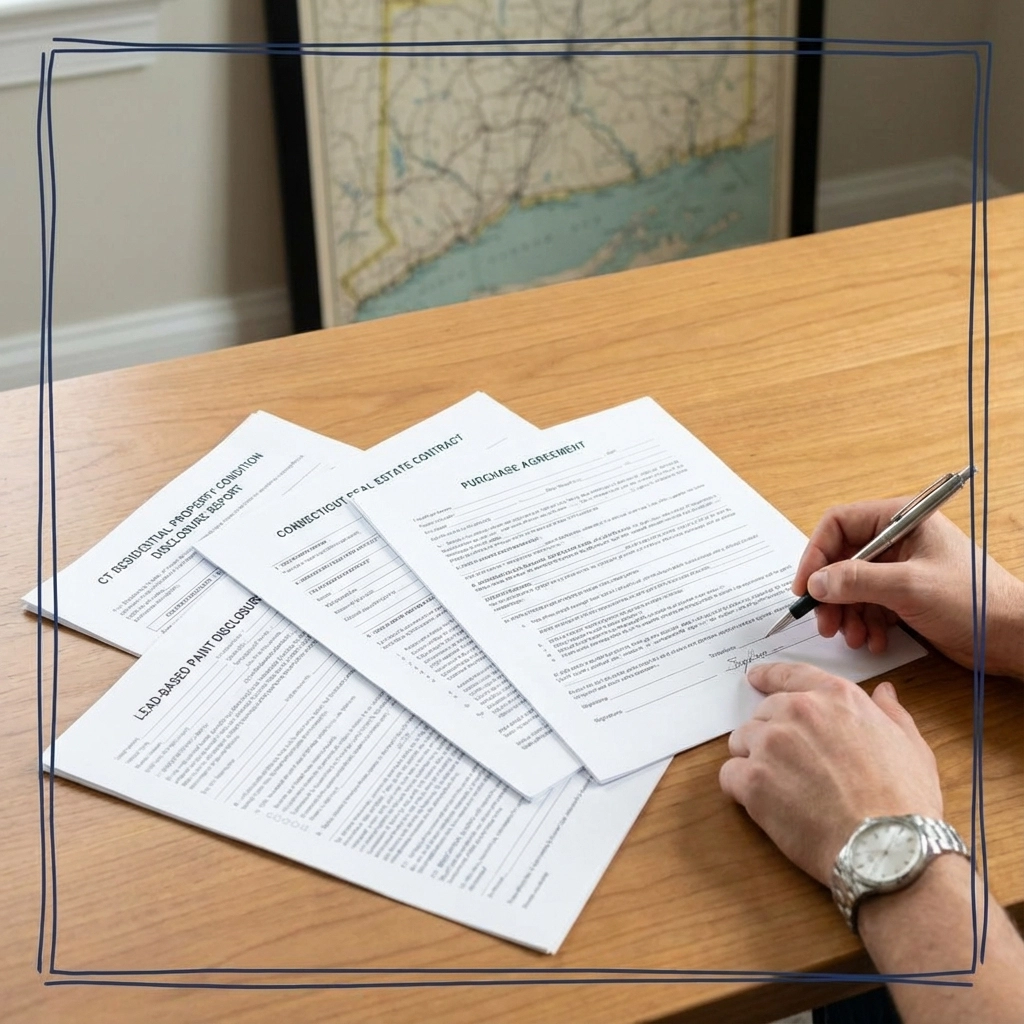
Connecticut requires sellers to complete a Residential Property Condition Disclosure Report and use the state's "AS IS" Residential Contract for Sale and Purchase. You must disclose all known defects including structural issues, environmental hazards, water damage, and any material facts that could affect the property's value or desirability.
Remember: Connecticut also requires a real estate attorney to conduct all residential closings, so factor this into your timeline and costs.
Step 2: Choose Your Selling Method
Option A: Cash Home Buyers
Contact multiple cash buying companies for offers. These investors typically:
Provide offers within 24-48 hours
Close in 7-14 days
Pay around 55-85% of fair market value
Handle all paperwork and closing costs
Don't require inspections or appraisals
Option B: Traditional Real Estate Agent
Work with an agent experienced in as-is sales who can:
Market your property to appropriate buyer pools
Manage showings and negotiations
Potentially achieve 80-85% of market value
Take 30-60 days for closing
Require standard inspections (buyers can still walk away)

Step 3: Gather Essential Documentation
Prepare these documents before listing:
Recent utility bills
Property tax records
HOA documents (if applicable)
Any previous inspection reports
Warranty information for major systems
Survey and deed information
Step 4: Price Strategically
For cash sales, expect offers between 55-85% of current market value. For traditional sales, price at 85-95% of market value to attract investors and buyers seeking value. A comparative market analysis (CMA) helps establish realistic expectations.
Step 5: Market Effectively
Whether selling to cash buyers or through traditional channels, clear communication is key:
State "AS-IS" prominently in all marketing
Highlight positive features like location, lot size, and potential
Use keywords like "investor opportunity" or "handyman special"
Include high-quality photos that honestly represent the property's condition
Financial Reality Check: What to Expect
Let's break down realistic numbers for a median Connecticut home valued at $425,784:
Cash Sale Scenario:
Sale price (70% of value): $298,049
Closing costs: ~$3,000
Net proceeds: ~$295,049
Traditional Agent Sale:
Sale price (85% of value): $361,916
Real estate commission (6%): $21,715
Closing costs: $4,000
Net proceeds: ~$336,201
Avoided Costs in Both Scenarios:
Average repair costs: $31,934
Staging and prep: $3,000-$8,000
Carrying costs during repairs: $2,000-$5,000
Connecticut-Specific Considerations
Transfer Taxes
Connecticut charges real estate transfer taxes ranging from 0.75% to 2.25% depending on your sale price, plus potential municipal transfer taxes. Factor these into your net proceeds calculation.
Disclosure Requirements
Connecticut's disclosure laws are comprehensive. Even in as-is sales, you must reveal known issues with:
Structural elements
Electrical, plumbing, and HVAC systems
Environmental hazards (lead paint, asbestos, mold)
Water damage or flooding history
Boundary disputes or easements
Your As-Is Selling Checklist
Before You List:
Complete Connecticut Residential Property Condition Disclosure Report
Gather all property documentation
Research comparable as-is sales in your area
Decide between cash buyers vs. traditional agent route
Find a Connecticut real estate attorney for closing
Set realistic price expectations
During the Sale Process:
Respond promptly to buyer inquiries
Allow reasonable inspection periods (buyers can still inspect)
Review all offers carefully (highest isn't always best)
Coordinate with your attorney for closing preparation
Prepare for 15-day buyer withdrawal period (Connecticut law)
At Closing:
Bring valid photo ID and any required documentation
Review all closing documents with your attorney
Transfer all keys, garage door openers, and access codes
Complete final walk-through with buyer if requested
Frequently Asked Questions
Q: Can I still get multiple offers on an as-is property?
A: Absolutely! Competitive markets often generate multiple offers even for as-is properties, especially when priced appropriately.
Q: What if buyers find major issues during inspection?
A: In as-is sales, buyers accept the property's condition, but they can still withdraw during the inspection period. Price your home accounting for known issues to minimize surprises.
Q: Do I need to make any repairs at all?
A: Generally no, but some lenders may require safety-related repairs for financing approval. Cash buyers typically accept properties in any condition.
Q: How long does an as-is sale take in Connecticut?
A: Cash sales: 7-14 days. Traditional sales: 30-60 days. Both are typically faster than conventional sales requiring repairs.
Q: Will I pay capital gains tax differently on an as-is sale?
A: No, capital gains treatment is the same regardless of selling method. Consult a tax professional about potential exclusions.
Ready to Sell Your Connecticut Home As-Is?
Selling as-is isn't right for everyone, but it can be an excellent solution when you need speed, certainty, or want to avoid the hassles of traditional selling. The key is understanding your options and working with experienced professionals who know Connecticut's requirements.
Whether you're dealing with an inherited property, facing financial challenges, relocating for work, or simply want to move on quickly, as-is selling provides a straightforward path to closing.
Call me at 860-985-4363 or visit melindatherealtor.com for a free consultation. Never too busy for you to be my #1 client. I'll help you evaluate whether as-is selling makes sense for your situation and connect you with the right resources to make it happen smoothly.
Sources
Connecticut Department of Consumer Protection – Real Estate Property Disclosures
https://portal.ct.gov/DCP/Real-Estate/Real-Estate/Property-Condition-DisclosureConnecticut General Statutes §20-327b & §20-327bb – Residential Property Condition Disclosure
https://www.cga.ct.gov/current/pub/chap_392.htmConnecticut REALTORS® – Connecticut Housing Market Data & Statistics
https://www.ctrealtors.com/market-data/Connecticut Department of Revenue Services – Real Estate Conveyance (Transfer) Tax
https://portal.ct.gov/DRS/Individuals/Individual-Taxes/Real-Estate-Conveyance-TaxNational Association of Realtors – Selling a Home As-Is
https://www.nar.realtor/selling-your-home/selling-your-home-as-is