












Why Rising Foreclosure Headlines Aren't a Red Flag
If you've been scrolling through the news lately, you've probably seen some alarming headlines about foreclosures. Words like "surge," "spike," and "10 straight months of increases" are everywhere. It's enough to make anyone nervous, especially if the 2008 housing crash is still fresh in your memory.
But here's the thing: headlines are designed to grab your attention, not give you the full picture. When you dig into the actual data, you'll find a very different story. One that's far less scary and much more grounded in reality.
Let's break down what's really happening with foreclosures in 2025 and why you shouldn't lose sleep over these numbers.
Foreclosure Filings Are Up, But Context Is Everything
Yes, it's true. According to ATTOM, foreclosure filings are up 32% year over year. That sounds dramatic, right? A 32% increase in anything related to housing feels like it should set off alarm bells.
But here's where context becomes your best friend.
That 32% increase is coming off historically low levels. During the pandemic and the years immediately following, foreclosure activity dropped to record lows thanks to moratoriums, forbearance programs, and a red hot housing market. What we're seeing now isn't a crisis building. It's a return to what normal looks like.
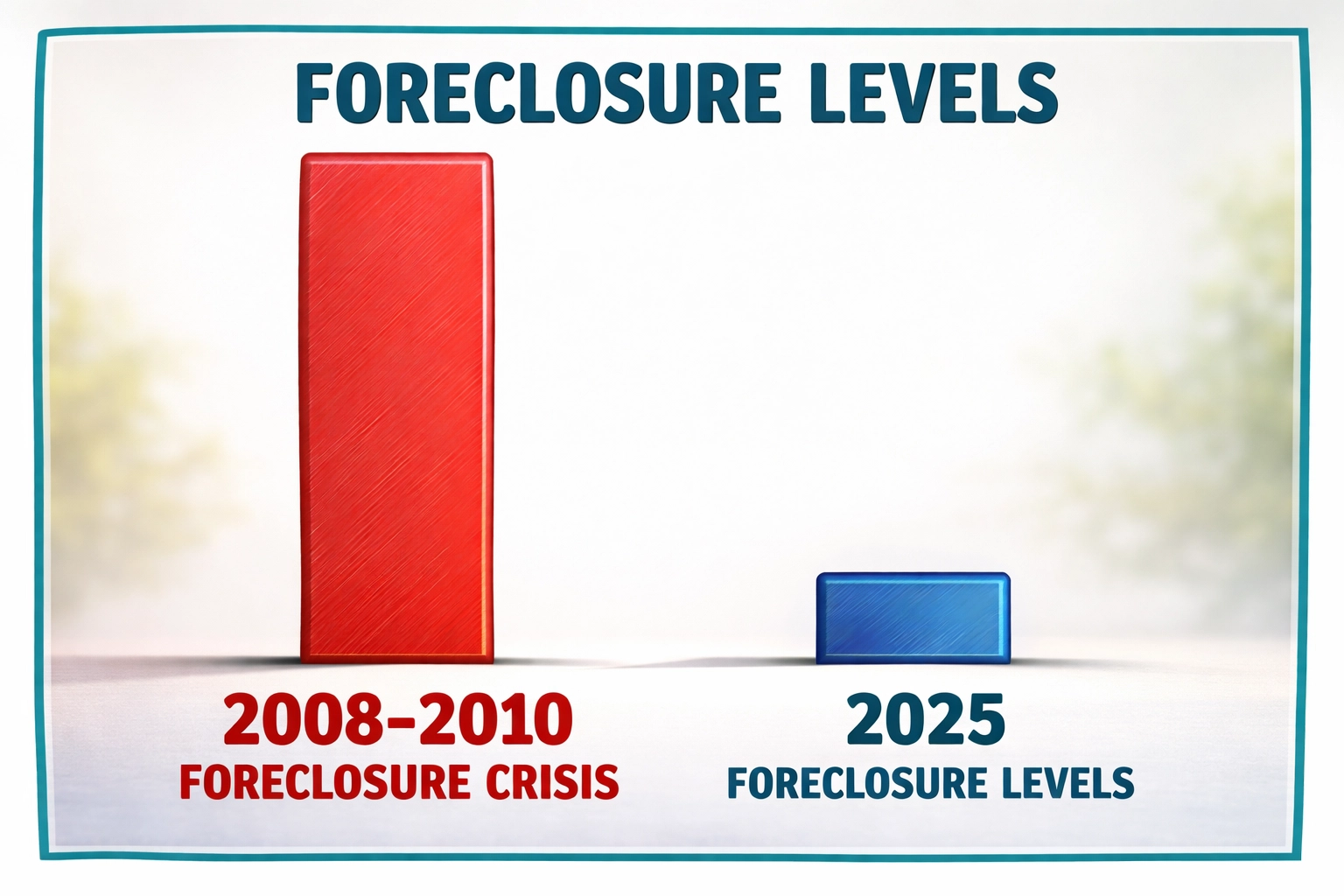
In fact, foreclosure activity in 2025 represents just 0.26% of all U.S. housing units. Compare that to the peak in 2010, when that number hit 2.23%. We're talking about a fraction of a fraction of what we saw during the actual housing crisis.
A Look at the Numbers: Then vs. Now
To really understand why today's foreclosure activity isn't cause for concern, we need to look at the historical data side by side.
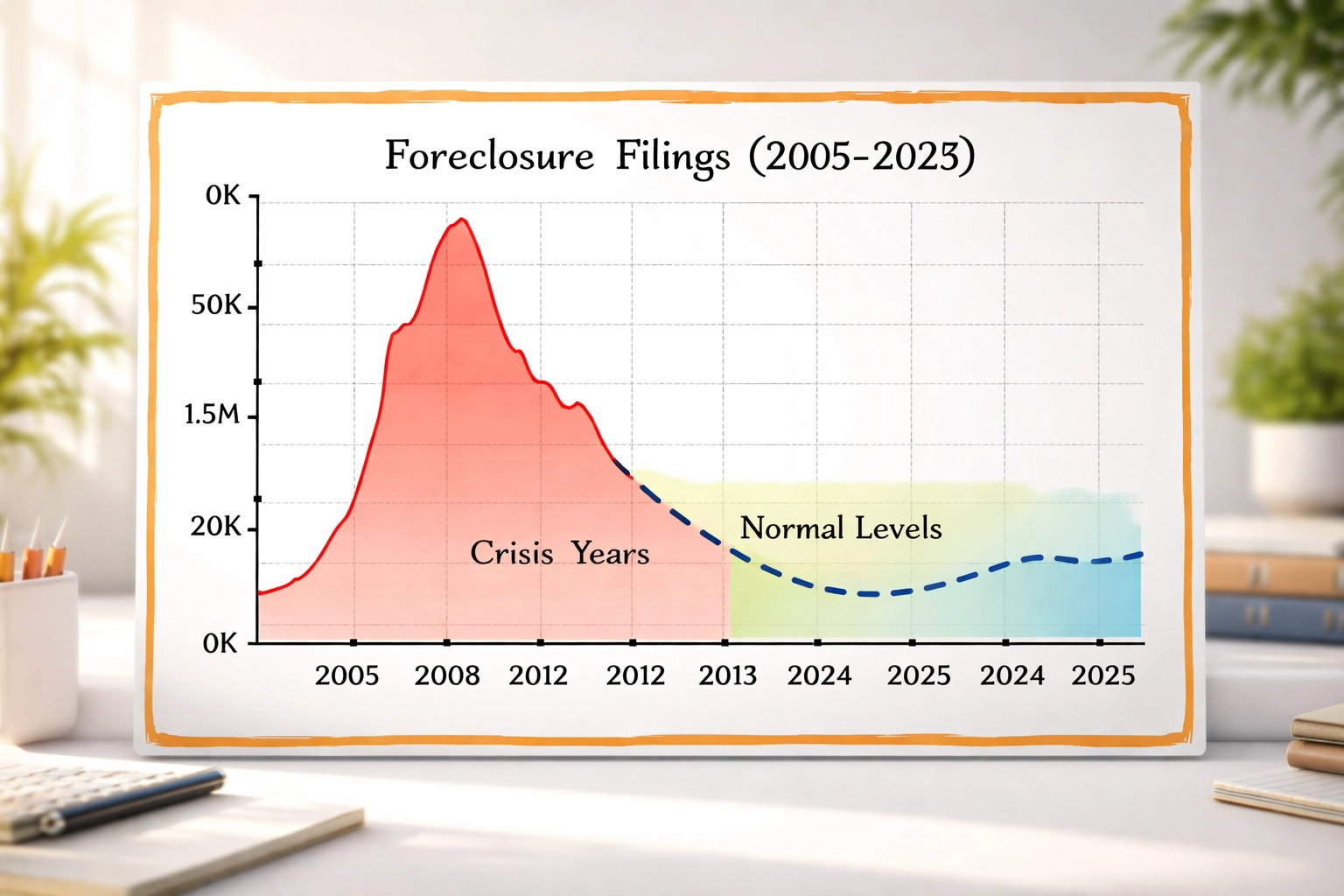
During the 2008 housing crash and its aftermath, foreclosure filings topped 1 million per year for several consecutive years. At the peak in 2010, nearly 2.9 million foreclosure filings hit the market. That was a genuine crisis that affected millions of families and shook the entire economy.
Now look at where we are today. Even with the recent uptick, 2025 foreclosure filings are down 87% from that 2010 peak. That's not a typo. We're at a fraction of crisis levels.
If you scan back to the 2017 through 2019 range, which were the last truly "normal" years for the housing market before the pandemic disrupted everything, you'll see that current foreclosure levels are actually falling right in line with what's typical.
What the Experts Are Saying
Rob Barber, CEO at ATTOM, put it perfectly when he explained what's driving these numbers:
> "Foreclosure activity increased in 2025, reflecting a continued normalization of the housing market following several years of historically low levels... While filings, starts, and repossessions all rose compared to 2024, foreclosure activity remains well below pre pandemic norms and a fraction of what we saw during the last housing crisis... today's uptick is being driven more by market recalibration than widespread homeowner distress, with strong equity positions and more disciplined lending continuing to limit risk."
That word "normalization" is key. This isn't a wave of distressed homeowners losing their properties en masse. This is the market settling back into its natural rhythm after years of artificially suppressed activity.
Why This Isn't a Repeat of 2008
If you lived through the 2008 crash, it makes sense that your brain immediately jumps to worst case scenarios when you hear anything about rising foreclosures. That experience was traumatic for so many people.
But the structural factors that led to that crisis simply don't exist in today's market. Here's why:
Lending Standards Are Much Stronger
Back in the mid 2000s, lenders were handing out mortgages like candy. No income verification? No problem. Low credit score? Sure, why not. These risky lending practices created a house of cards that eventually collapsed.
Today's lending environment is completely different. Borrowers have to actually prove they can afford their mortgages. Documentation requirements are strict, and lenders are far more careful about who qualifies for home loans.
Borrowers Are More Qualified
Because of those tighter standards, today's homeowners are generally in a much stronger financial position. They had to demonstrate their ability to repay before they ever got the keys. This means fewer people are stretched thin from day one.
Home Equity Is at Record Highs
This might be the biggest difference between now and 2008. Over the past five years, home prices have risen significantly across most of the country. That means homeowners have built up substantial equity in their properties.
Why does this matter for foreclosures? Because if someone faces financial hardship today, they often have options. They can sell their home, potentially walk away with money in their pocket, and avoid foreclosure altogether.
In 2008, millions of homeowners were "underwater," meaning they owed more than their home was worth. They had no good options. That's simply not the case for most homeowners today.
What This Means If You're Buying or Selling
So how should this information affect your real estate decisions?
For Buyers
Don't expect a flood of foreclosure deals to hit the market. While you might see slightly more distressed properties than in previous years, we're not looking at the kind of inventory surge that happened after 2008. If you're ready to start your home search, focus on the traditional market and work with a knowledgeable agent who can help you find the right property.
For Sellers
The foreclosure headlines shouldn't change your selling strategy. The market isn't being flooded with distressed inventory that would drive prices down. If you're thinking about selling your home, focus on presenting it well and pricing it appropriately for your local market.
For Current Homeowners
If you're worried about your own financial situation, remember that you likely have more options than you realize. Your home equity can be a lifeline if you need it. Check your home's current value and know what you're working with.
The Bottom Line
Headlines about rising foreclosures might sound scary, but the data tells a much calmer story. We're seeing a return to normal market conditions, not the beginning of another crisis. Strong lending standards, qualified borrowers, and record home equity are all working together to keep the market stable.
The next time you see a dramatic headline about foreclosures, take a deep breath and remember the context. A 32% increase sounds alarming until you realize it's 32% of an historically low number.
Ready to make your move in 2025? Call me at 860-985-4363 or visit melindatherealtor.com for a free consultation. Never too busy for you to be my #1 client.
Frequently Asked Questions
Are we headed for another housing crash like 2008?
No. The structural factors that caused the 2008 crash, including risky lending and underwater mortgages, don't exist in today's market. Current foreclosure levels are 87% below the 2010 peak.
Why are foreclosure filings increasing?
Foreclosures are normalizing after years of historically low activity due to pandemic protections and moratoriums. This is market recalibration, not distress.
Should I wait for foreclosure deals before buying a home?
Waiting for a wave of foreclosure inventory isn't a reliable strategy. Current levels remain well below what would create significant buying opportunities from distressed sales.
What does "normalization" mean for the housing market?
Normalization means foreclosure activity is returning to typical pre pandemic levels. This is healthy for the market and indicates stability, not crisis.
How does home equity protect against foreclosure?
When homeowners have significant equity, they can sell their property to avoid foreclosure, often walking away with cash rather than going through the foreclosure process.
Sources
ATTOM Data Solutions – 2025 Foreclosure Market Report
https://www.attomdata.com/news/market-trends/foreclosures/Federal Reserve Bank – Mortgage Delinquency & Foreclosure Rates
https://www.federalreserve.gov/econres/notes/foreclosure-rates.htmMortgage Bankers Association (MBA) – National Delinquency Survey
https://www.mba.org/news-and-research/research-and-economics/single-family-research/national-delinquency-surveyNational Association of Realtors® – Housing Equity & Distress Trends
https://www.nar.realtor/research-and-statisticsCoreLogic – U.S. Foreclosure & Home Equity Reports
https://www.corelogic.com/intelligence/foreclosure-trends/