












Renovate or Sell As-Is? The 2026 Math for CT Homeowners
Deciding whether to fix up your home or list it exactly as it stands is one of the biggest headaches homeowners face in 2026. Whether you are looking at a family property in Ashford or managing a complex probate situation in Killingly, the question remains the same: Will spending fifty thousand dollars on a new kitchen actually put an extra fifty thousand dollars in your pocket?
In the current Connecticut market, the answer is rarely a simple yes. With contractor fees and material costs at record highs, the math has changed. Today, we are going to dive deep into the real numbers behind renovations versus selling as-is so you can make the move that actually protects your equity.
The Financial Reality of 2026 Labor Costs
If you have tried to book a plumber or an electrician lately in towns like Brooklyn or Plainfield, you already know the deal. Labor costs have surged by about 12 percent over the last year alone. According to current industry data, general contractors are now charging anywhere from 50 to 150 dollars per hour, while specialized trades like electricians can easily top 130 dollars per hour (Statista, 2026).
When you look at a whole home renovation for a standard 1,500 square foot house, you are looking at an average cost of over 52,000 dollars. For many homeowners, especially those dealing with an inherited property that needs significant love, that kind of cash just is not sitting in the bank. Even if it is, the risk of "scope creep" is higher than ever. It is very common for a 10,000 dollar cosmetic refresh to turn into a 40,000 dollar structural nightmare once you open up the walls.

The Simple Math: Calculating Your Net Proceeds
When I sit down with my clients, I always tell them to focus on net proceeds, not the gross sale price. It does not matter if you sell your house for 500,000 dollars if you spent 100,000 dollars and six months of your life getting it to that point.
Here is the formula we use to see if a renovation is worth the stress:
Determine the After Repair Value (ARV): This is what the home would sell for if it were perfect and move-in ready.
Calculate Repair Costs: Get real quotes and then add a 10 percent buffer for the "oops" moments that always happen.
The 25,000 Dollar Rule: If the difference between your ARV (minus repairs) and your current as-is price is less than 25,000 dollars, you are almost always better off selling as-is.
According to research from platforms like Zillow and Realtor.com, the time and interest spent on renovation loans often eat up that small profit margin anyway.
High ROI vs. Money Losers
If you do decide to pick up a paintbrush, you need to be strategic. Not all upgrades are created equal. In 2026, buyers are looking for functionality and efficiency over luxury. They want to know the roof is solid and the heat works before they care about gold plated faucets.
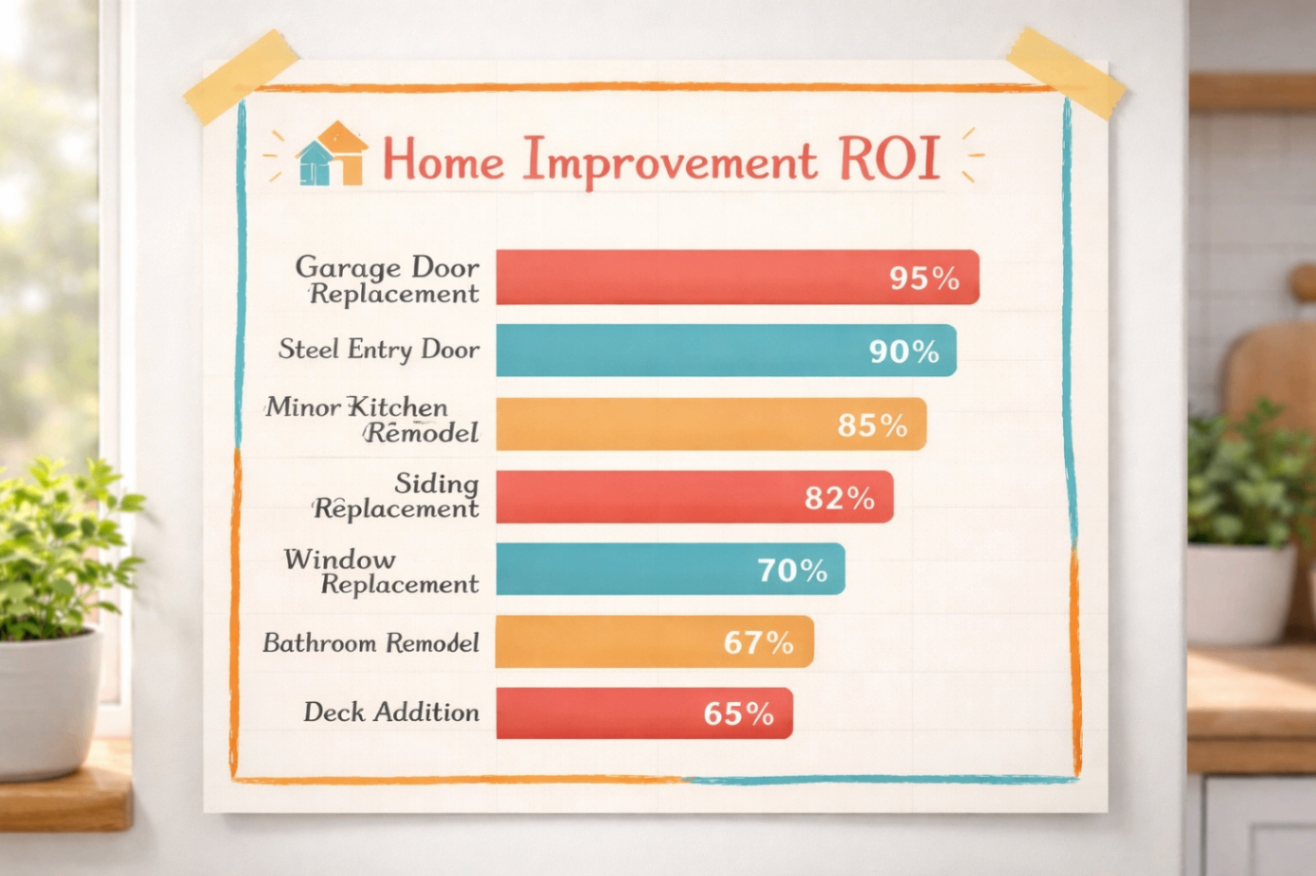
As you can see from the data, things like garage door replacements and minor kitchen refreshes (think new hardware and countertops) offer the best bang for your buck. However, major structural changes or high end luxury upgrades rarely return 100 percent of their cost. If you are in a neighborhood in Putnam where the average home price is 350,000 dollars, putting in a 75,000 dollar chef's kitchen is a losing move. You will never get that money back because the neighborhood ceiling will hold the price down.
The Hidden Costs of Waiting
One thing most people forget to factor in is the "holding cost." A typical renovation can extend your timeline by 90 to 180 days. Compare that to an as-is cash sale that can close in as little as 14 days.
During those four to six months of renovating, you are still paying:
Property taxes (which are not getting any cheaper in Connecticut).
Heating and electricity.
Homeowners insurance.
Interest on any renovation loans.
In a typical Connecticut scenario, these carrying costs can easily total 4,000 to 6,000 dollars. When you add that to the increased realtor commission on a higher sale price, that "profit" you were chasing starts to look a lot smaller. Sometimes, homeowners find that after six months of dust and stress, they only netted a couple thousand dollars more than if they had just walked away on day one.

Why Selling As-Is is Often the Smartest Move
Selling a home in any condition is about more than just the money. It is about your peace of mind. For many of my clients in areas like Windham or Sterling, the thought of managing a construction crew is enough to cause a breakdown.
This is where my specialty comes in. I help homeowners bypass the traditional circus. I buy homes in any condition, which means:
No Cleanouts: You can literally leave the furniture and the "stuff" you don't want behind.
No Repairs: You don't have to fix the leaky roof or the dated bathroom.
No Showings: You don't have to keep the house "stage ready" for months.
All Cash Offers: We can close on your timeline, whether that is two weeks or two months.
This process is especially helpful for probate situations. When you have inherited a property in Woodstock or Thompson, the last thing you want to do is navigate a renovation with siblings or other heirs. An as-is sale allows everyone to get their share of the equity quickly and move on.
Comparing the Options: A Real World Example
Let's look at a hypothetical home in Vernon.
As-Is Value: 275,000 dollars.
Estimated ARV (After Repair Value): 360,000 dollars.
Estimated Renovation Cost: 65,000 dollars.
Estimated Holding Costs (6 months): 5,000 dollars.
If you renovate, your "cost" is 70,000 dollars. Your net (before commissions) is 290,000 dollars. You "made" 15,000 dollars more than the as-is price. But you also spent 180 days managing contractors, dealing with delays, and paying bills on a house you don't live in. For most people, that 15,000 dollars is not worth the hundreds of hours of labor and stress.

Frequently Asked Questions
Does selling as-is mean I have to accept a lowball offer?
Not at all. It means the price reflects the current state of the home. Investors and cash buyers factor in the repair costs and the risk they are taking on. You are essentially paying them to take the problem off your hands.
What is the fastest way to sell a house in Connecticut?
A cash offer is the fastest route. By avoiding the bank appraisal and mortgage approval process, you can cut weeks or even months off the closing timeline. This is ideal if you are trying to avoid foreclosure or need to relocate for a job.
Will you really buy my house in ANY condition?
Yes. Whether it has structural issues, a failing septic system, or is just stuck in 1974, I am interested. I have seen it all, and nothing scares me off.
Moving Forward with Confidence
Every house and every situation is unique. What works for a neighbor in Eastford might not be the right choice for you in Hampton. The most important thing is to have all the facts before you sign a contract with a contractor or a listing agent.
If you are feeling overwhelmed by the "to-do" list at your property, let's chat. I can provide a comparative market analysis to show you exactly what your home is worth today versus what it could be worth with repairs. We can weigh the pros and cons together, and if an as-is cash offer makes the most sense for your life, I can make that happen.
Call me at 860-985-4363 or visit melindatherealtor.com for a free consultation. Never too busy for you to be my #1 client.