











Mortgage Rates Hit a 3 Year Low. Here's Why It Matters.
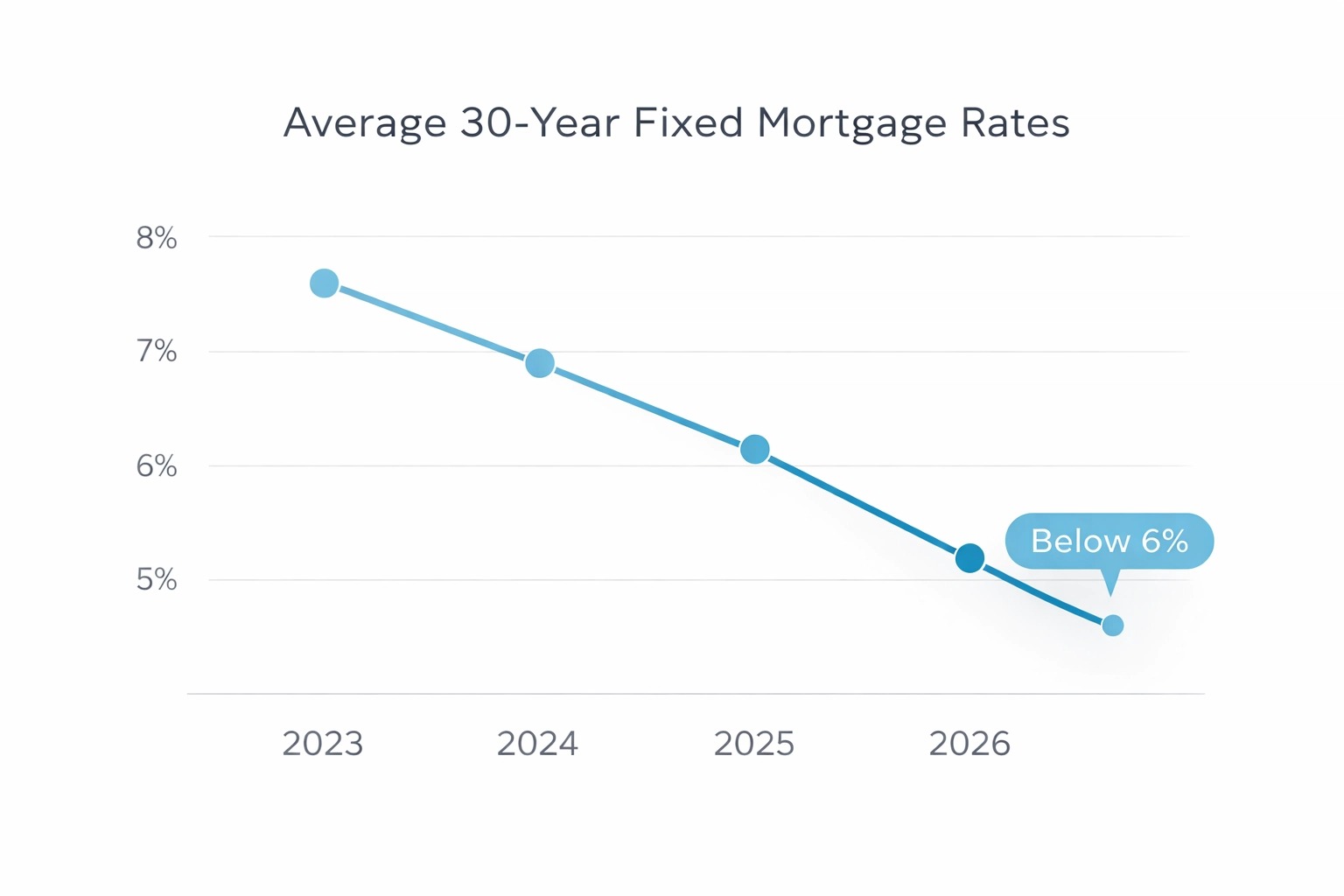
If you're one of the thousands of homebuyers who've been waiting for rates to fall, I've got some exciting news. It's already happening. And recently, mortgage rates crossed an important milestone that hasn't been seen in about three years.
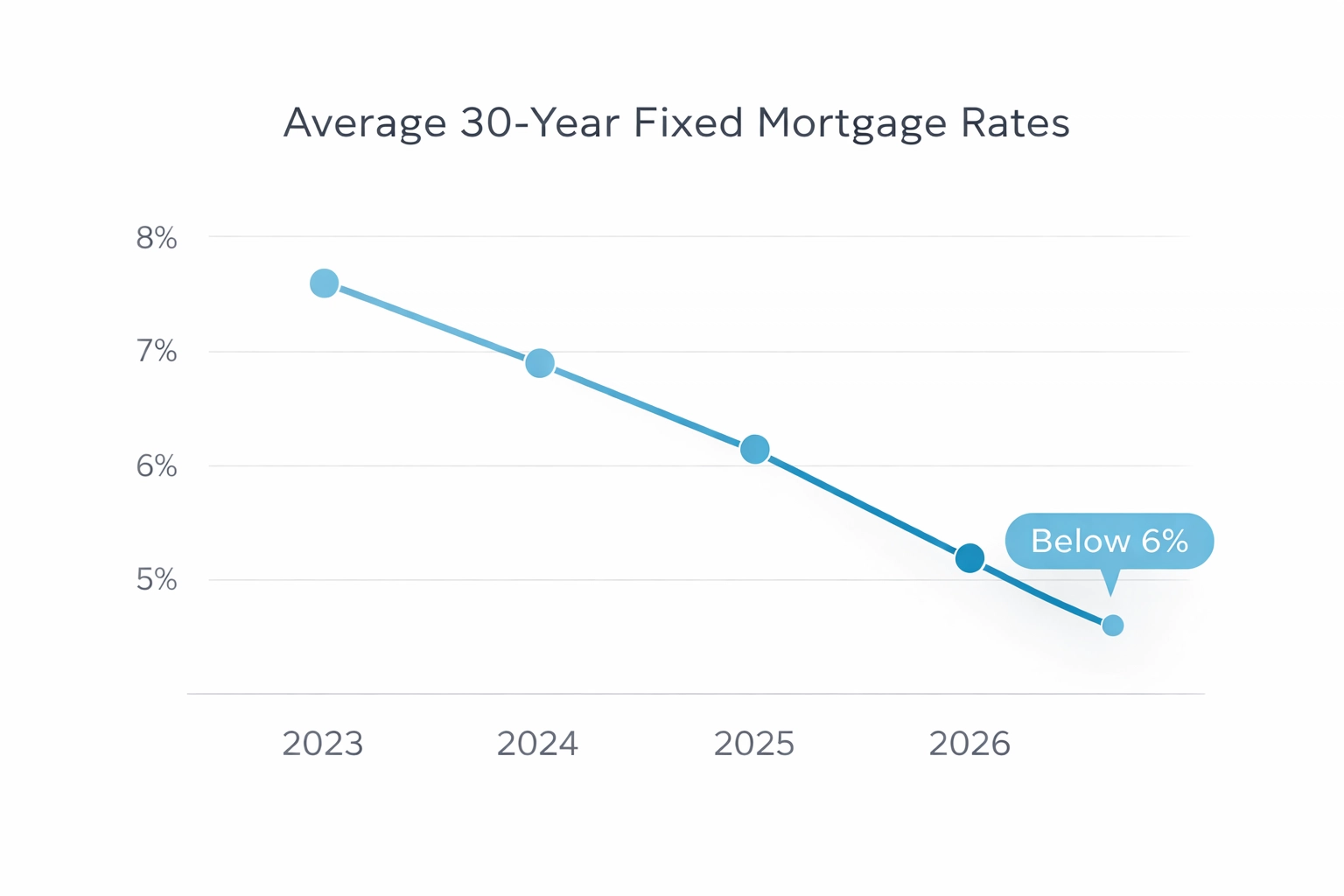
Rates officially dipped their toes into the 5s. While they're currently sitting in the low 6% territory, this moment marked a critical threshold for buyers who've been on the sidelines. According to Fannie Mae's January 2026 Housing Forecast, expert projections show rates will likely hover near this range throughout the year.
So what does this mean for you? Let's break it all down.
Why Current Mortgage Rates Are Such a Big Deal
A mortgage rate doesn't just affect the interest you end up paying on your home loan. It shapes your entire buying experience, from your monthly budget to the neighborhoods you can afford.
When rates were hovering around 7% just one year ago, a lot of buyers felt completely priced out. Monthly payments were higher. Budgets felt tighter. Affordability was a bigger challenge across the board. That's especially true for first time homebuyers, who felt the biggest pinch during that period.
But according to industry experts, that's starting to change now that rates are slowly inching down. The current environment represents the lowest sustained level since September 2022, offering meaningful relief after an extended period of elevated borrowing costs.
The Real Math Behind Lower Rates
Let's talk numbers because this is where things get exciting for your wallet.
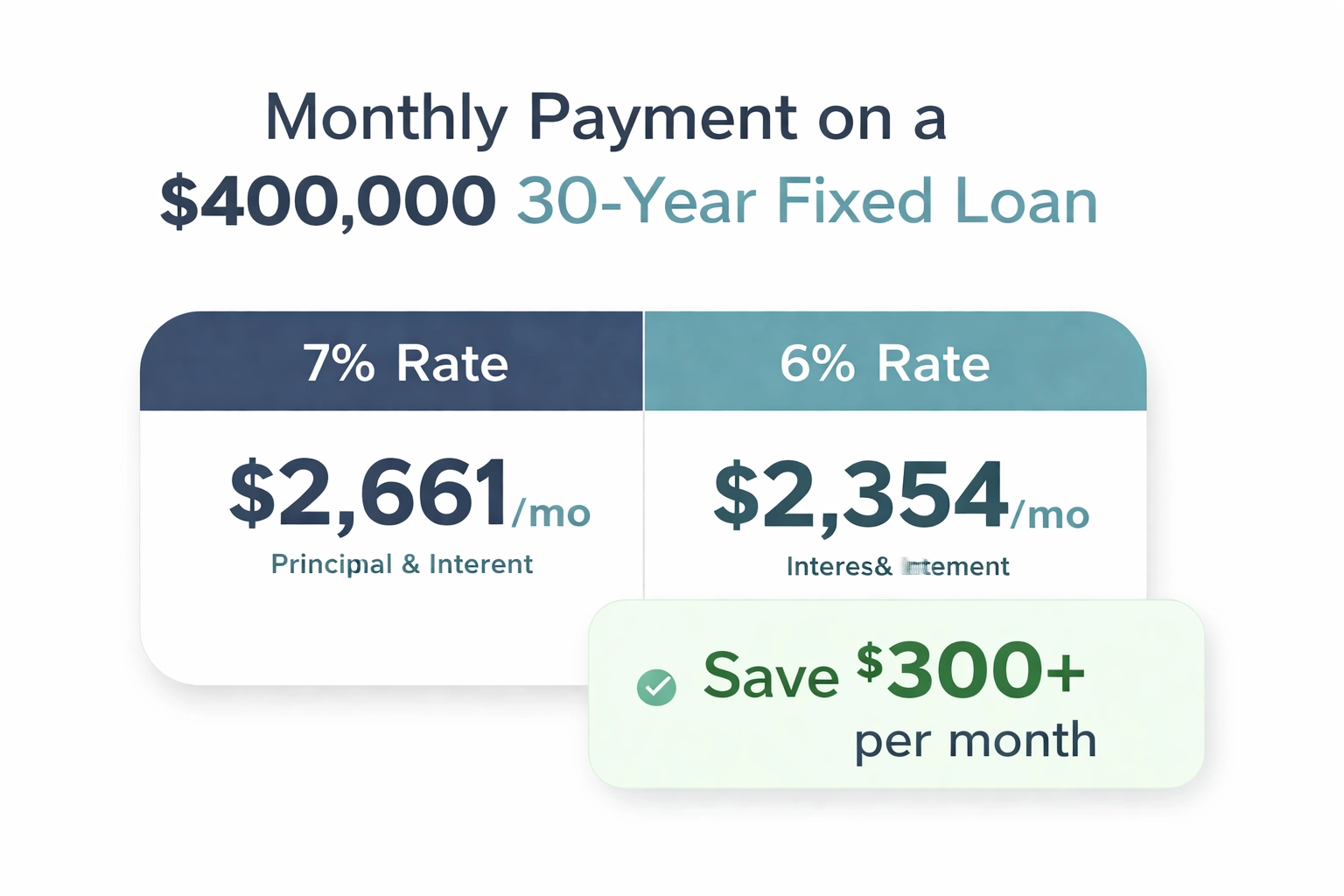
Right now, borrowing costs are in their lowest range in almost three years. And that can change the type of home you can afford. At 6% or below, you'll see some real differences:
Lower monthly payments. The payment on a $400,000 home loan is down over $300 compared to when rates were around 7%. That's not pocket change. That's an extra $3,600 back in your budget every single year.
More buying power. Thanks to that extra breathing room in your budget, you might be able to make a stronger offer, purchase in a different location, or buy a home that checks more of your boxes.
In other words, you can now stretch your dollar further than you could twelve months ago. And that feels like a significant shift compared to when rates were sitting at 7%.
Here's an important distinction though. The difference from a low 6% to a high 5% isn't as dramatic as you might think. But the difference from 7% to 6%? That is very much a big deal, and it's a number that's already working in your favor right now.
This Opens the Door for Millions of Buyers
To drive home just how much this helps potential homebuyers like you, consider this research from the National Association of Realtors (NAR). Their data shows that when mortgage rates sit around this level, millions more households can afford a home.
When rates are at 6% or below:
5.5 million more households can afford the median priced home
Roughly 550,000 of those people will likely buy a home within 12 to 18 months
That's not just speculation or wishful thinking. That's pent up demand finally getting the green light they've been waiting for.
You've got the chance right now to get ahead and buy before more people notice the game has just changed. Because once that wave of buyers enters the market, competition for homes will increase. And increased competition often means higher prices and more bidding wars.
What This Means for Your Homebuying Timeline
If buying a home has been on your goal sheet for 2026, this is your nudge to start taking action. The math is already working in your favor, and waiting for rates to drop even further could mean missing your window.
Here's why timing matters. According to experts, mortgage rates in the 2% to 3% range are unlikely to return in the foreseeable future. The lowest recorded rate was 2.65% in January 2021, which was a historic anomaly driven by pandemic era economic conditions. Waiting for those rates to come back isn't a realistic strategy.
The smart move? Focus on what's happening now. Rates in the low 6s represent a genuine opportunity that buyers haven't had in three years.
An Important Callout Before You Jump In
Mortgage rates don't operate in a vacuum. Home prices, local inventory, property taxes, home insurance, and your personal finances still matter. A lot.
And a rate in this territory doesn't mean every home suddenly works for every buyer. Your individual situation including your credit score, debt to income ratio, and down payment amount will all play a role in the rate you actually qualify for.
That's why getting pre approved and running your numbers with a trusted lender is key. Multiple mortgage products now offer rates in the 5% range or lower for qualified borrowers, so understanding where you stand financially can unlock even better options.
Still, this rate environment puts more buyers in play than we've seen in years. So if buying didn't work for you before, it's absolutely worth taking another look.

What Steps Should You Take Right Now?
If you're feeling motivated to explore your options, here's a simple game plan to get started:
1. Check your credit score. Your credit score directly impacts the mortgage rate you'll qualify for. Even a small improvement could save you thousands over the life of your loan. You can check your score for free through many banking apps and credit monitoring services.
2. Get pre approved. A pre approval gives you a real understanding of your buying power and what your payment could be at today's rates. Keep in mind that most pre approvals are only good for 30 to 90 days, so this step makes the most sense as you're ready to get serious.
3. Run your numbers honestly. Look closely at all your expenses to come up with your budget. Consider what you're spending on other bills and what your monthly mortgage payment would be once you buy. Use a mortgage calculator to get a realistic picture.
4. Connect with a local real estate agent. The right agent does more than show homes. They help you understand pricing, competition, timing, and strategy before you ever write an offer. Having someone in your corner who knows the local market is invaluable.
Ready to See What Today's Rates Mean for You?
Mortgage rates dropping to a three year low isn't just a headline. For many buyers, where rates are now could be the difference between watching from the sidelines and finally getting the keys to their next home.
If you've been waiting for a sign to re run your numbers and see what's possible now, this is it.
Call me at 860-985-4363 or visit melindatherealtor.com for a free consultation. Never too busy for you to be my #1 client.
Whether you're a first time buyer ready to make your move or someone who's been watching the market for the right moment, I'd love to help you figure out your next steps.
Frequently Asked Questions
What is a good mortgage rate in 2026?
Currently, rates in the low 6% range are considered favorable. Some qualified borrowers may even access rates in the high 5s. This represents the lowest level in about three years.
Will mortgage rates go down more in 2026?
Expert forecasts from Fannie Mae predict rates will hover around 6% for most of 2026 and 2027. While minor fluctuations may occur, dramatic drops are not expected.
How much can I save with a 6% rate compared to 7%?
On a $400,000 loan, you could save over $300 per month, which adds up to more than $3,600 per year and potentially over $100,000 over the life of a 30 year loan.
Should I buy now or wait for lower rates?
Waiting for significantly lower rates may not be realistic. Rates in the 2% to 3% range are unlikely to return. The current environment offers the best opportunity in three years.
How do I know what rate I'll qualify for?
Your credit score, debt to income ratio, down payment, and loan type all affect your rate. Getting pre approved is the best way to know exactly what you qualify for.
Sources
Freddie Mac – Primary Mortgage Market Survey (PMMS)
https://www.freddiemac.com/pmmsFannie Mae – January 2026 Housing Forecast
https://www.fanniemae.com/research-and-insights/forecastNational Association of Realtors® – Housing Affordability & Buyer Power Data
https://www.nar.realtor/research-and-statisticsMortgage Bankers Association (MBA) – Mortgage Rate & Application Trends
https://www.mba.org/news-and-research/research-and-economicsFederal Reserve Economic Data (FRED) – 30-Year Fixed Mortgage Rate History
https://fred.stlouisfed.org/series/MORTGAGE30