











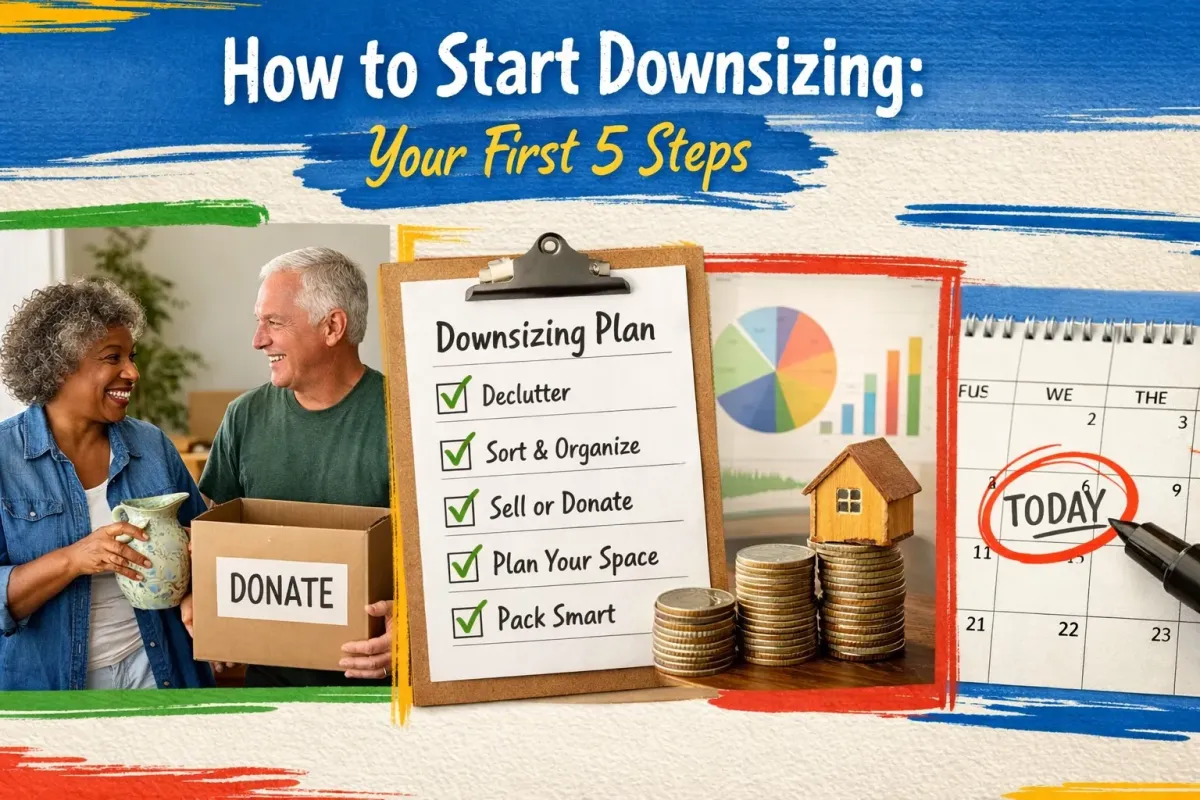
How to Start Downsizing: Your First 5 Steps
Downsizing isn't just about moving to a smaller house. It's about creating a fresh start, simplifying your life, and making room for what really matters. Whether you're an empty nester, looking to reduce maintenance, or just craving a simpler lifestyle, the process can feel overwhelming if you don't know where to begin.
The good news? With the right approach, downsizing can actually be exciting instead of stressful. Let's walk through the five essential steps to get you started on the right foot.
Why Downsizing Is More Than Just Moving
Before we dive into the steps, let's reframe what downsizing really means. According to the National Association of Realtors, more than 51% of homeowners aged 60-70 are considering downsizing, and it's not just about square footage.
It's about gaining freedom. Less time cleaning. Lower utility bills. More money for travel or hobbies. When you approach downsizing as an opportunity rather than a loss, the entire process becomes more meaningful.

Step 1: Start Early (Don't Rush the Process)
Here's the biggest mistake people make when downsizing: waiting until the last minute. If you're seriously considering a smaller home, start the process at least six months before you plan to move.
Starting early gives you time to make thoughtful decisions instead of rushed ones. You'll have space to sort through decades of belongings without the pressure of a looming closing date hanging over your head.
Why timing matters: Research from AARP shows that homeowners who start the downsizing process early report significantly less stress and are more satisfied with their final decisions. When you're not racing against the clock, you can actually enjoy the process of curating what comes with you to your next chapter.
Break the timeline into manageable chunks. Maybe you tackle one room per month. Or you dedicate one weekend per month to sorting. The key is consistency, not speed.
Step 2: Audit Your Lifestyle (What Do You Actually Use?)
This step requires honest self-reflection. Walk through your current home and ask yourself: What rooms do I actually spend time in? What items do I use regularly versus what's just taking up space?
According to a study by UCLA's Center on Everyday Lives of Families, the average American home contains over 300,000 items, yet we only use a fraction of them regularly. Most of us are living with way more stuff than we need.
Try this exercise: For one week, place a small sticky note on every item you use or touch. At the end of the week, you'll have a visual map of what's actually essential to your daily life. Everything without a sticky note? That's a candidate for letting go.
Think about your new lifestyle too. Will you still host big holiday dinners, or are you ready to pass that tradition to the next generation? Do you need a formal dining room, or would you rather have a cozy reading nook? Your future home should support the life you want to live, not the life you used to live.

Step 3: Declutter Room by Room (The "Keep, Donate, Toss" Method)
Now comes the physical work, but don't worry: we'll keep it simple with a proven system that actually works.
The three-box method is your best friend here. As you go through each room, sort every item into one of three categories:
Keep: Items you use regularly, bring you joy, or are truly irreplaceable
Donate: Usable items in good condition that someone else could benefit from
Toss: Broken, expired, or unusable items that need to go
Start with the easiest rooms first to build momentum. Bathrooms and guest rooms are usually good places to begin because they have fewer sentimental items. Save the attic, basement, and photo albums for when you've got your rhythm down.
Pro tip from the professionals: The National Association of Senior and Specialty Move Managers recommends working in two-hour sessions to avoid decision fatigue. Set a timer, take breaks, and don't try to tackle everything in one weekend.
Be ruthless with duplicates. You don't need three sets of towels or five spatulas when you're downsizing. Keep the best, donate the rest.
Step 4: Map Out Your Finances (Consider All Your Options)
Downsizing usually frees up equity, but it's important to understand all your financial options before you make a move. This is where working with a real estate professional who understands your specific situation makes all the difference.
Consider these questions:
What's your current home worth in today's market?
What will your new home cost?
How much equity will you have to work with?
Are there tax implications you should know about?
According to Zillow's research, homeowners who downsize typically free up 30-50% of their home's equity, which can significantly boost retirement savings or provide a financial cushion.
If you're looking for a simple, streamlined selling process without the hassle of showings and repairs, consider HomeOffersEZ. It's designed for homeowners who want a straightforward sale so they can focus on their next chapter. Of course, a traditional listing works great too: it really depends on your timeline and priorities.
Thinking about downsizing but not sure where to start? Call me at 860-985-4363 or visit melindatherealtor.com for a free consultation. Never too busy for you!

Step 5: Focus on the "Why" (More Freedom, Less Maintenance)
When the decluttering gets tough: and it will: come back to your "why." Why are you downsizing in the first place?
Maybe you're tired of yard work every weekend. Maybe you want to travel more and not worry about an empty house. Maybe you're ready to simplify so you can focus on hobbies, grandkids, or volunteer work.
Common motivations for downsizing (according to research from Realtor.com):
Reduced maintenance and upkeep (68%)
Lower housing costs (61%)
Desire to travel more (47%)
Health or mobility concerns (38%)
Closer proximity to family (34%)
Write down your reasons and post them somewhere visible. When you're debating whether to keep that china set you haven't used in 15 years, your "why" will help you make the right call.
Remember: You're not losing anything. You're gaining time, freedom, and peace of mind. The memories stay with you regardless of how much stuff you own.
How Melinda Makes Downsizing Simple
Here's the truth: downsizing is easier when you have the right support. I specialize in helping Connecticut homeowners through these life transitions with care and attention to what matters most to you.
Every situation is different. Maybe you need help understanding the current market. Maybe you want options for selling your home quickly. Maybe you need recommendations for estate sale companies or charities that pick up donations. Whatever you need, I'm here to make this process as smooth and stress-free as possible.
I focus on your priorities: not just closing a deal. Whether you're moving to be closer to family, looking for a maintenance-free lifestyle, or simply ready for something smaller and cozier, I'll help you navigate every step with confidence.
Visit my website to learn more about how I can help, or just give me a call. I'm never too busy for you to be my #1 client.
Frequently Asked Questions
How long does it take to downsize a home?
Most experts recommend starting the downsizing process at least 4-6 months before your planned move date. However, the timeline varies based on how much you need to sort through and how much time you can dedicate each week. Starting early reduces stress and allows for more thoughtful decisions.
What should I do with items that have sentimental value but won't fit in my new home?
Take photos of sentimental items before letting them go: you'll keep the memories without the physical clutter. You can also pass items to family members who'll appreciate them, or keep just one representative item from a collection rather than the entire set.
Is it better to sell my home first or find my new home first when downsizing?
This depends on your local market conditions and financial situation. In a seller's market, you might sell first and arrange temporary housing. In a buyer's market, you might want to secure your new home first. A local real estate professional can help you determine the best strategy for your specific situation.
How do I know what size home I should downsize to?
Consider your lifestyle audit from Step 2. Think about the rooms you actually use, how often you have guests, and what activities are important to you. Many people find that 1,000-1,500 square feet works well for a couple downsizing from a larger family home, but your ideal size depends on your specific needs.
Can I afford to downsize if I still have a mortgage?
Absolutely. In fact, downsizing can be a smart financial move even with an existing mortgage. The equity you've built in your larger home can help pay off your current mortgage and potentially allow you to purchase your smaller home with cash or a much smaller loan, reducing your monthly expenses.
Sources
National Association of Realtors - https://www.nar.realtor/
AARP Research on Downsizing - https://www.aarp.org/
UCLA Center on Everyday Lives of Families - https://www.celf.ucla.edu/
National Association of Senior and Specialty Move Managers - https://www.nasmm.org/
Zillow Housing Research - https://www.zillow.com/
Realtor.com Market Trends - https://www.realtor.com/