












Four Ways Your Home Equity Can Work for You
You've probably heard people talking about home equity lately. Maybe you've even heard that homeowners today are sitting on record amounts of it. But what does that actually mean for you? And more importantly, how can you use it?
Let's break it down in plain English. Your home equity isn't just some abstract financial term, it's real money that can help you reach your goals, whether that's moving to a better home, funding your kid's education, or getting out of a tough financial spot.
What Exactly Is Home Equity?
Think of equity as the slice of your home that you actually own, free and clear. Every time you make a mortgage payment, you're buying a little more of your house from the bank. And when home values go up (like they have in Connecticut over the past few years), your equity grows even faster.
Here's a simple way to calculate it: Take what your home is worth today and subtract what you still owe on your mortgage. That's your equity.
So if your home is worth $400,000 and you owe $150,000, you've got $250,000 in equity. That's a serious chunk of change.
How Much Equity Does the Average Homeowner Have?
According to data from the U.S. Census Bureau and ATTOM, the numbers are actually pretty impressive. About two-thirds of homeowners have substantial equity built up right now.
Here's the breakdown: 39% of homeowners own their homes outright without owing a penny on them. Another 27% have at least 50% equity in their homes. That means the majority of homeowners in America have a significant financial asset they can tap into if needed.
And if you're wondering what that looks like in actual dollars, CoreLogic reports that the typical homeowner has around $300,000 in equity today. Yep, six figures.
Whether you have that much, more, or even a bit less, you've got options. Let's walk through four smart ways you could put that equity to work.

1. Move Into a Home That Better Fits Your Life
Life doesn't stand still, and neither should your living situation. Maybe your current home feels cramped now that you're working from home or your family's grown. Or maybe you're rattling around in a house that's way too big since the kids moved out.
Your equity gives you the power to make a change. You can use it as a down payment on a home that better fits where you are in life right now. According to the National Association of Realtors, the median down payment for repeat buyers is 17%, but with substantial equity, many homeowners are making much larger down payments or even buying their next home in cash.
Buying with cash (or a large down payment) gives you serious advantages. You'll have a stronger offer in competitive markets, you won't need to deal with mortgage contingencies, and you could save thousands on interest over the years. Plus, you'll have more negotiating power with sellers.
If you're in Connecticut and thinking about making a move, whether it's to Pomfret, Woodstock, or any of our beautiful Quiet Corner towns, your equity could be the key that unlocks your next chapter.
2. Upgrade Your Current Home
Not ready to move? No problem. You can reinvest that equity right back into your current home instead.
Home improvements are actually one of the most common uses of home equity. According to recent surveys, homeowners frequently tap into equity for kitchen remodels, bathroom renovations, and major repairs that can range from $10,000 to $50,000 or more.
But here's the thing: not all renovations are created equal when it comes to getting your money back. Before you start tearing down walls, it's worth talking to a real estate agent about which upgrades will give you the biggest return on investment when it's time to sell.
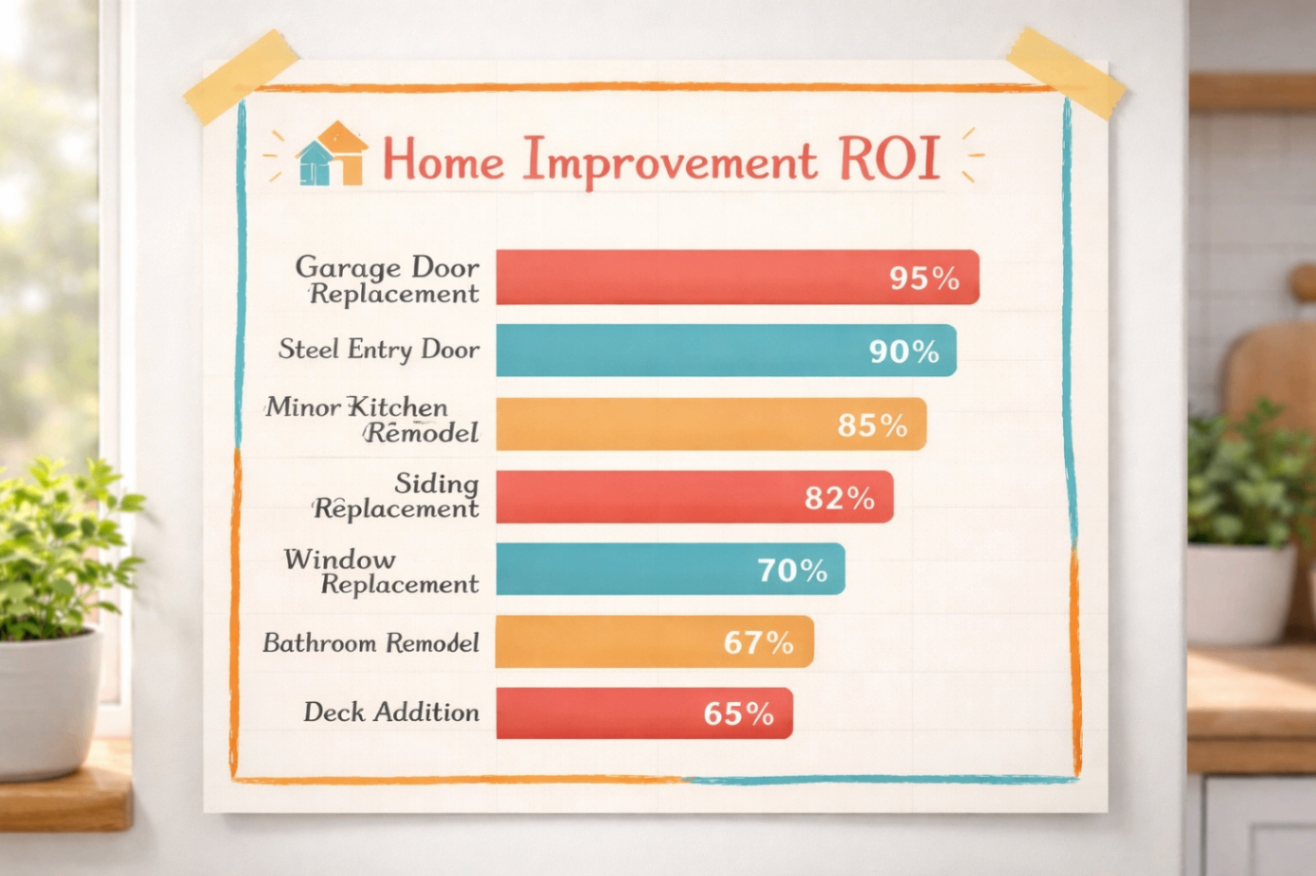
Generally speaking, projects like a garage door replacement, new entry door, or minor kitchen refresh tend to recoup more of their costs than major luxury upgrades. But it also depends on your neighborhood and what buyers in your area are looking for.
Another bonus: depending on where you live and how you access your equity, you might be able to deduct the interest on your home equity loan from your taxes if you're using it for substantial home improvements. That's according to the IRS, though you should definitely check with a tax professional to see if this applies to your situation.
3. Fund a Major Life Goal
Your home equity can be a powerful tool for achieving big dreams. We're talking about things like:
Paying for education: Whether it's your own career change or helping your kids through college, home equity loans typically offer lower interest rates than student loans or personal loans.
Starting a business: If you've always dreamed of being your own boss, your equity could provide the startup capital you need.
Planning for retirement: Some homeowners use a cash-out refinance to generate additional income or make strategic investments.
Helping loved ones: Maybe you want to help your adult child with their own down payment, or support an aging parent who needs care.
According to recent research, more homeowners are using their equity to fund these kinds of major life milestones, especially as other forms of credit have become more expensive. The key is that home equity loans and lines of credit generally come with lower interest rates than credit cards or personal loans, making them a more affordable way to borrow larger amounts.

4. Avoid Foreclosure in Tough Times
This one's important, and it's not talked about enough. If you're struggling to make your mortgage payments, your equity can actually be a lifeline instead of a trap.
Here's what I mean: during the 2008 housing crash, many homeowners were underwater, they owed more than their homes were worth. When they couldn't make payments, they had no good options. They either went through foreclosure or a short sale, both of which damaged their credit for years.
Today's situation is completely different. If you have equity and you're facing financial hardship, you can sell your home and walk away with money in your pocket. That money can help you get back on your feet, find more affordable housing, and avoid the credit damage of a foreclosure.
According to ATTOM Data Solutions, foreclosure rates remain near historic lows partly because homeowners have equity options they didn't have 15 years ago. If you're in this situation, it's not something to be ashamed of, life happens. But it is something to address quickly, before you fall too far behind.
The 20% Rule: Keep a Financial Cushion
Before you run out and tap all your equity, here's something really important to understand: you want to keep at least 20% equity in your home as a financial cushion. This is called maintaining a healthy loan-to-value ratio, or LTV.
Why does this matter? A few reasons:
You avoid private mortgage insurance (PMI): If you dip below 20% equity, you'll likely have to pay PMI, which can add hundreds of dollars to your monthly payment.
You maintain financial flexibility: That cushion protects you if home values dip temporarily or if you need to sell quickly.
You have better borrowing terms: Lenders offer better rates and terms when you have more equity.
Many homeowners didn't know about this guideline back in 2008, and they got hurt when the market crashed. The good news? According to the Intercontinental Exchange, most of today's homeowners have plenty of cushion. As of Q4 2025, mortgage holders have $17.3 trillion in total home equity, with $11.2 trillion of that being "tappable equity", meaning homeowners can access it while still maintaining that important 20% cushion.

Your Next Steps
If any of these four uses of home equity sound appealing, here's what you should do:
Step 1: Get a personalized equity assessment. You need to know exactly how much equity you have before you can make any decisions. Message me 'MARKET' and I'll run a current market analysis on your home so you know exactly where you stand.
Step 2: Talk to a financial advisor. While I can tell you about the real estate side of things, a financial advisor can help you understand the tax implications, compare different ways to access your equity (home equity loan, HELOC, cash-out refinance), and make sure it fits into your overall financial plan.
Step 3: Make a plan. Whether you're upgrading, moving, or funding a dream, having a clear plan will help you use your equity wisely and avoid costly mistakes.
Call me at 860-985-4363 or visit melindatherealtor.com for a free consultation. Never too busy for you to be my #1 client.
FAQs About Using Home Equity
Q: What's the difference between a home equity loan and a HELOC?
A: A home equity loan gives you a lump sum upfront with a fixed interest rate and fixed monthly payments. A HELOC (Home Equity Line of Credit) works more like a credit card, you can borrow what you need up to a certain limit, and you only pay interest on what you actually use. HELOCs typically have variable interest rates.
Q: How long does it take to access my home equity?
A: It depends on the method you choose. A home equity loan or HELOC can take 2-6 weeks from application to funding. A cash-out refinance typically takes 30-45 days. You'll need an appraisal, income verification, and a credit check for any of these options.
Q: Will using my home equity affect my credit score?
A: Initially, yes: applying for any new loan will cause a small, temporary dip in your credit score due to the hard inquiry. However, if you make your payments on time, it can actually help your credit score in the long run by diversifying your credit mix and showing responsible borrowing.
Q: Can I use home equity if I still have a mortgage?
A: Absolutely. In fact, most people who tap into their home equity still have a mortgage. As long as you have enough equity built up (remember that 20% cushion), you can access it through a home equity loan, HELOC, or cash-out refinance.
Q: What if home values drop after I take out a home equity loan?
A: This is why maintaining that 20% cushion is so important. If values drop slightly, you still have a buffer. However, if you've borrowed too much and values fall significantly, you could end up underwater. That's why it's crucial to be conservative about how much you borrow.
Q: Are there tax benefits to using home equity?
A: It depends on what you use the money for. According to the IRS, you can deduct home equity loan interest if you use the funds to "buy, build, or substantially improve" the home that secures the loan. You cannot deduct the interest if you use the funds for other purposes like paying off credit cards or buying a car. Always consult with a tax professional about your specific situation.
Sources
U.S. Census Bureau – Homeownership & Equity Distribution
https://www.census.gov/housing
Provides national data on homeownership rates and the share of homeowners who own outright or have significant equity.ATTOM – U.S. Home Equity & Foreclosure Report
https://www.attomdata.com
Tracks homeowner equity levels and explains why high equity has kept foreclosure rates historically low.CoreLogic – Homeowner Equity Insights
https://www.corelogic.com/intelligence/homeowner-equity-insights
Authoritative source for average homeowner equity levels (≈$300k) and trends in tappable equity.National Association of Realtors (NAR) – Profile of Home Buyers and Sellers
https://www.nar.realtor/research-and-statistics
Provides data on repeat-buyer down payments and how homeowners use equity when purchasing their next home.Intercontinental Exchange (ICE) – Mortgage Monitor Report
https://www.ice.com/market-data/reports/mortgage-monitor
Industry benchmark for total and tappable U.S. home equity and loan-to-value (LTV) safety thresholds.