












Don't Skip That House! Why Older Listings Win
You're scrolling through listings, coffee in hand, dreaming about your next home. Then you spot one that catches your eye. Nice curb appeal. Good price. Decent neighborhood. But wait... it's been on the market for 60 days.
Your brain immediately goes into detective mode:
What's wrong with it?
Why hasn't anyone snatched it up yet?
Is there something I'm missing here?
I get it. That reaction made total sense a few years ago when homes were flying off the market faster than concert tickets. But here's the thing: the market has changed. And that "stale" listing you're about to skip? It might actually be your golden ticket.
The Market Has Shifted (And That's a Good Thing)
Remember 2021 and 2022? Homes were selling in hours. Multiple offers were the norm. Buyers were waiving inspections left and right just to have a fighting chance. It was wild.
But that's not where we are anymore.
According to Realtor.com, the median days on market has increased significantly compared to those frenzied pandemic years. Right now, seeing a home sit for 73 days isn't unusual. In fact, it's pretty normal for this time of year.
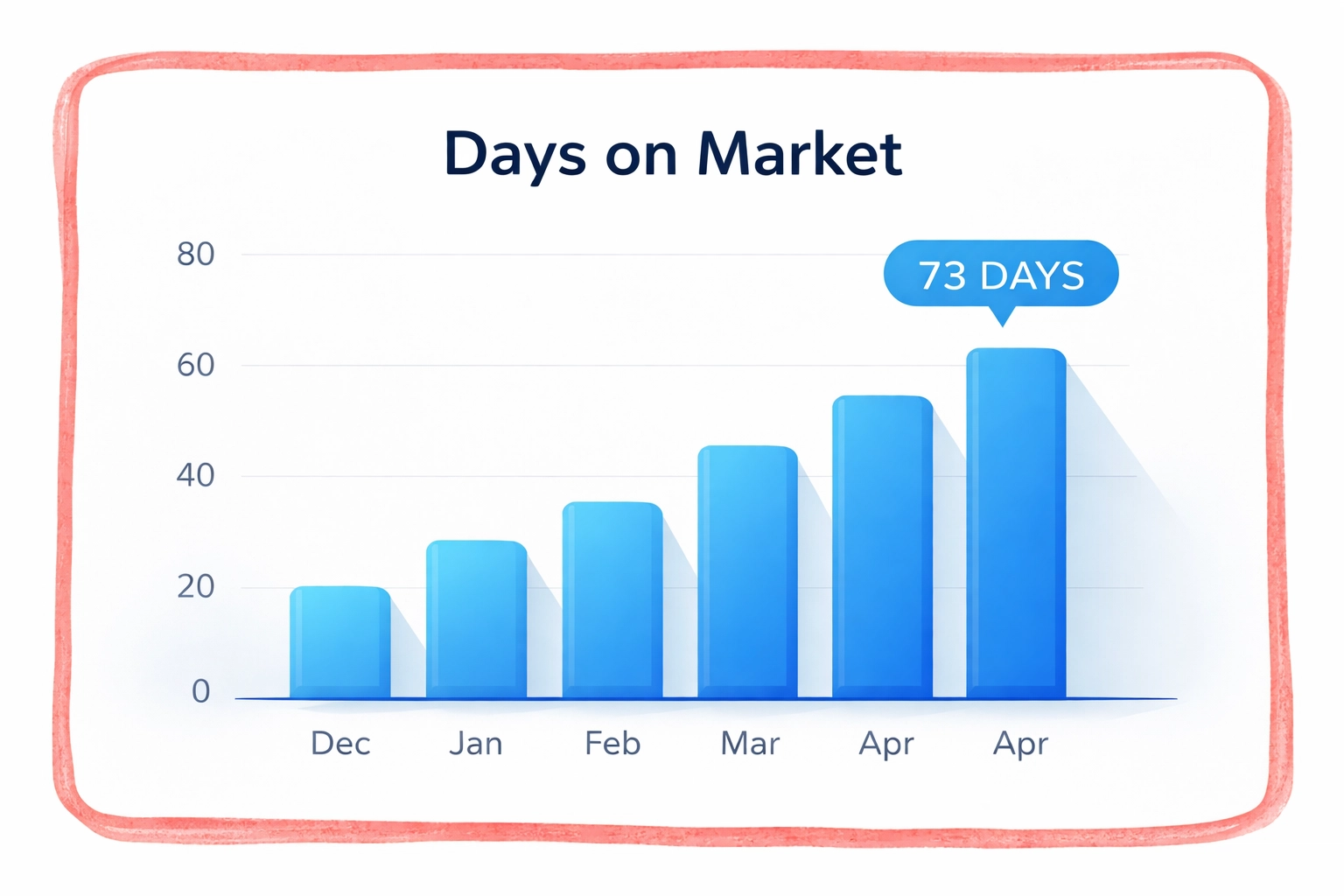
So what changed? A few things:
Inventory has grown. There are simply more homes available now, which means buyers have more options to consider.
Mortgage rates have fluctuated. Higher rates earlier in the cycle slowed buyer activity, giving homes more time on the market.
Buyers are being more selective. With less competition, people are taking their time to find the right fit.
The bottom line? A longer time on market doesn't automatically mean something is wrong with the house. It often just means the market is behaving... normally.
Why Homes Actually Sit (Spoiler: It's Usually Fixable Stuff)
Let's break down the real reasons a perfectly good home might linger on the market. None of these are deal breakers, and most of them actually work in your favor as a buyer.
The Seller Overpriced It at First
This happens all the time. A seller gets emotionally attached to their home (totally understandable) and prices it higher than the market supports. After a few weeks with no bites, they adjust. But by then, the listing has already accumulated some "days on market."
According to the National Association of Realtors, overpricing is one of the top reasons homes fail to sell quickly. But here's the good news: that price drop means you might be looking at a better deal than what early shoppers saw.
The Photos Didn't Do It Justice
We live in a visual world. Bad listing photos can absolutely tank a home's first impression. Dark rooms, weird angles, cluttered spaces... they all turn buyers away before they even schedule a showing.
But photos don't tell the whole story. A home that looks "meh" online might blow you away in person. This is exactly why I always encourage my clients to tour homes that check their boxes, even if the photos aren't Pinterest perfect.

High Inventory in That Specific Area
Some neighborhoods just have more homes for sale than others right now. When buyers have ten options on the same street, even great homes take longer to sell. It's basic supply and demand.
The Timing Was Off
Real estate has seasons. Listing a home right before the holidays or during a slow market period can mean fewer eyeballs and longer time on market. That doesn't mean anything is wrong with the property. It just means the timing wasn't ideal.
The Hidden Gem Factor: Why These Homes Are Worth a Second Look
Here's where things get exciting for you as a buyer.
Homes that have been sitting for a while often come with something newer, hotter listings don't: motivated sellers.
When a home hasn't sold in 60 or 90 days, sellers start getting anxious. They've already mentally moved on. They're more flexible on price. They're open to covering closing costs. They might even include that beautiful patio furniture you loved.
Research from Zillow shows that homes on the market longer than average tend to sell below their original list price. That's negotiating power you simply don't get with a fresh listing that has five offers in the first weekend.
Quality That Stands the Test of Time
Many older listings are also older homes, and that's not a bad thing. According to housing experts, homes built decades ago often feature superior construction materials and craftsmanship that's hard to find in new builds today.
Think solid wood framing, real hardwood floors, plaster walls, and architectural details that give a home genuine character. These properties have already proven they're built to last.
Plus, older homes typically sit on larger lots in established neighborhoods with mature trees and convenient access to schools, shopping, and parks. That's value you can't replicate in a brand new subdivision.
But What If Something IS Wrong?
Okay, let's address the elephant in the room. Sometimes a home sits on the market because there actually is an issue. Maybe the foundation needs work. Maybe there's a funky smell the seller can't eliminate. Maybe the layout is just plain weird.
Here's the thing: that's exactly what home inspections are for.
A professional home inspection will uncover any real problems with the property. And if issues do surface, you have options:
Negotiate repairs before closing
Ask for a price reduction to cover future fixes
Request credits at closing
Walk away if the issues are too significant
The inspection process protects you. So don't let "days on market" scare you off before you've even had a chance to dig into the details.

How to Spot the Real Gems (Versus the Real Problems)
Not every home that's been sitting is a winner. But with the right approach, you can separate the diamonds from the duds.
Work With a Local Agent
This is huge. A knowledgeable local agent (hi, that's me!) can pull disclosure documents, research the property's history, and give you the inside scoop on why a home might be lingering. Sometimes we know things that aren't in the listing, like a price reduction coming or a seller who's suddenly more motivated.
Visit in Person
Photos lie. Or at least, they don't tell the whole truth. Always tour a home before making any judgments. You might be surprised by how different a space feels in real life.
Ask the Right Questions
Why has the home been on the market so long? Have there been any offers? What repairs have been done recently? What's the seller's timeline? These questions can reveal a lot about whether this listing is an opportunity or a headache.
Your Next Move
A home sitting on the market isn't always a red flag. In today's normalized market, it's often just the new reality. And for savvy buyers willing to look past the "days on market" number, these listings can offer incredible opportunities: better prices, negotiating leverage, and the chance to find a home that other buyers overlooked.
So next time you see a listing that's been hanging around for a while, don't automatically scroll past. It might just be the perfect home waiting for someone smart enough to give it a second look.
Ready to find your hidden gem? Call me at 860-985-4363 or visit melindatherealtor.com for a free consultation. Never too busy for you to be my #1 client.
Looking to start your home search? Check out my buyer welcome page for helpful resources and next steps!
Frequently Asked Questions
What does "days on market" mean?
Days on market (DOM) refers to how long a home has been listed for sale. It starts when the listing goes active and ends when a contract is signed. A higher DOM doesn't necessarily indicate problems. It often reflects current market conditions.
Should I avoid homes that have been on the market a long time?
Not necessarily! Many homes sit due to pricing strategies, poor marketing, or simply timing. These listings can offer better negotiating opportunities and less competition.
How can I tell if something is actually wrong with a home?
Always get a professional home inspection before closing. Inspectors will identify structural issues, system problems, and other concerns that might not be visible during a casual walkthrough.
Do sellers of older listings negotiate more?
Often, yes. Sellers whose homes have been on the market longer are typically more motivated and flexible on price, closing costs, and other terms.
Is it better to buy an older home or new construction?
Both have advantages. Older homes often feature better construction quality, larger lots, and established neighborhoods. New construction offers modern amenities and fewer immediate repairs. Your preference depends on your priorities and budget.
Sources
National Association of Realtors: https://www.nar.realtor
Realtor.com Housing Market Data: https://www.realtor.com
Zillow Research: https://www.zillow.com/research