












The Real Cost of Waiting for Lower Interest Rates
If I had a nickel for every time someone asked me, "Melinda, should I just wait until the rates go down?" I’d probably have enough to cover a down payment in Woodstock. It’s the million-dollar question in the 2026 real estate market. Everyone wants a deal, and naturally, everyone wants a lower monthly mortgage payment. But here’s the thing: waiting for that "perfect" rate might actually be the most expensive move you can make.
In today's market, where inventory is still tighter than a pair of jeans after Thanksgiving dinner, the financial trade-offs of sitting on the sidelines are massive. We aren't just talking about a few dollars here and there; we’re talking about lost equity, increased competition, and the very real possibility that the house you want today will cost $50,000 more by the time rates finally budge.
The Price of Home Appreciation vs. Interest Savings
One of the biggest misconceptions I hear is that a lower interest rate will always save you money. While a lower rate definitely helps your monthly budget, it doesn't happen in a vacuum. Real estate prices don't just sit still while the Federal Reserve makes up its mind.
According to recent data from Zillow, home prices in many competitive markets continue to climb because the demand for housing still outweighs the supply (Zillow, 2025). Think about it this way: if you wait a year for rates to drop by 1%, but the price of a home in Pomfret or Brooklyn increases by 8%, you haven't actually saved anything. In fact, your required down payment just went up, and your total loan amount is higher.
Let’s look at a quick example. A home priced at $400,000 today might cost $432,000 next year if we see 8% appreciation. Even if you get a slightly better rate later, you are now financing a much larger chunk of change. You’re essentially paying a "waiting tax" that goes straight to the seller instead of toward your own home equity.

The "Rate Drop" Stampede: Why Competition Kills Savings
Here is a little secret from the front lines of Connecticut real estate: buyers are like a coiled spring. Right now, there are thousands of people sitting on the sidelines waiting for the exact same thing you are. The moment rates take a meaningful dip, all those people are going to rush back into the market at the exact same time.
When that happens, we go right back to the days of 15 offers on one house, waived inspections, and "highest and best" deadlines by Monday at noon. According to the National Association of Realtors (NAR), when inventory is low and demand spikes due to falling rates, the resulting bidding wars often push sale prices well above the asking price (NAR, 2025).
If you buy now, you might have a higher rate, but you have much more negotiating power. You might actually get the seller to pay for some repairs or contribute to your closing costs: things that disappear the second a house has ten people fighting over it. As the saying goes in our industry: "Marry the house, date the rate." You can always refinance your loan later, but you can’t "refinance" a high purchase price that you got stuck with during a bidding war.
Using AI to Find the "Hidden" Financial Wins
It’s 2026, and we have tools now that make home shopping a lot smarter than it used to be. I use AI-driven financial insights to help my clients see the "long game." These tools don't just look at what a house costs today; they analyze historical trends in towns like Killingly or Plainfield to predict where equity is likely to grow fastest.
AI helps us look at the "Total Cost of Ownership" over five to ten years. Often, these models show that the wealth built through home equity in a rising market far outpaces the temporary "extra" cost of a higher interest rate. According to a report by Statista, the integration of AI in real estate has allowed buyers to identify undervalued properties 15% faster than traditional methods (Statista, 2025). This means we can find you a home that is likely to appreciate quickly, essentially "earning" you back that extra interest payment in the form of net worth.
Building Equity: Your Future Self Will Thank You
Every month you spend waiting is a month you spend paying someone else’s mortgage (your landlord’s) or sitting in a home that doesn't fit your life. When you buy a home, a portion of every payment goes toward your principal. That’s forced savings.
Furthermore, once you own the home, you have the opportunity to increase its value through improvements. If you snag a house now at a lower purchase price, you can use the money you saved on the "waiting tax" to boost your ROI.
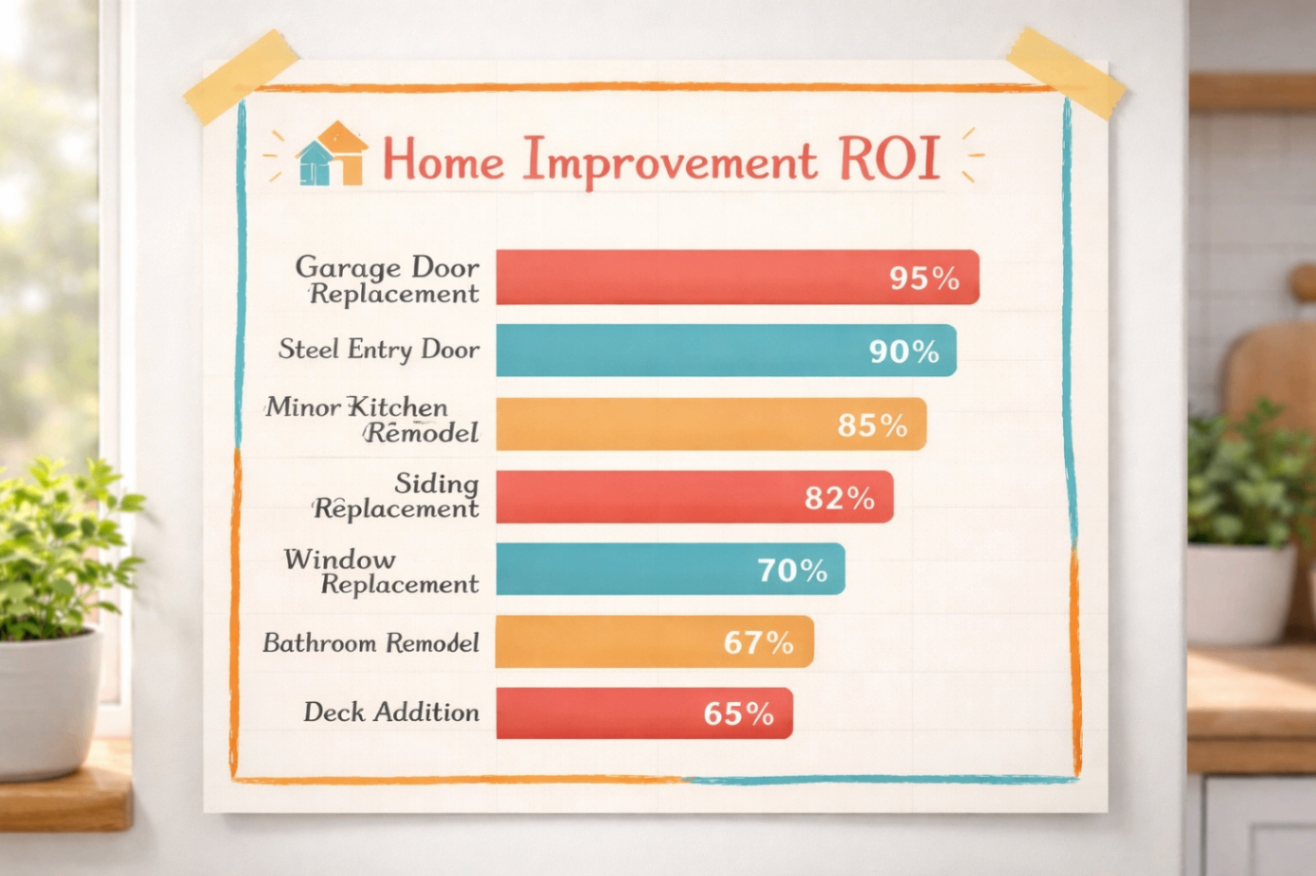
As you can see from the chart above, things like minor kitchen remodels or even replacing a garage door have a massive impact on your home's value. By getting into the market now, you start the clock on that appreciation. If you wait two years, you’ve missed out on twenty-four months of market growth and twenty-four months of paying down your loan.
When Does it Actually Make Sense to Wait?
Look, I’m your friend first and your Realtor second. I’m not going to tell you to buy if it’s a bad move for your specific situation. According to the U.S. Department of Housing and Urban Development (HUD), financial readiness is the most important factor in a successful home purchase (HUD, 2024).
You should probably wait if:
Your credit score needs a major tune-up: A better score can save you way more than a market-wide rate drop ever could.
You don't have an emergency fund: Buying a house with zero dollars left in the bank is a recipe for stress.
You’re planning to move in two years: If you aren't staying put for at least five years, the closing costs and potential market fluctuations might not make sense.
But if you are financially stable and just waiting for the "perfect" economic headline? You might be waiting yourself right out of your dream home.

What First-Time Buyers Need to Know
If this is your first time around the block, terms like "refinancing" and "amortization" might sound like a foreign language.
Refinancing: This is when you swap your current mortgage for a new one with a lower interest rate later on. It usually costs a bit in fees, but if rates drop by 1-2%, it can save you hundreds of dollars a month.
Amortization: This is just a fancy word for how your loan is paid off over time. In the beginning, most of your payment goes to interest. As time goes on, more goes to the principal (the actual balance of the house).
Inventory: This refers to the number of homes available for sale. Low inventory = a "Seller's Market" (like we have now in Connecticut).
The best way to navigate this is to get a pre-approval early. This isn't just a piece of paper; it’s your ticket to the show. It tells you exactly what you can afford so you don't fall in love with a house in Tolland that is out of reach.
FAQs About Buying in Today's Market
Q: If I buy now and rates drop in six months, am I stuck?
A: Not at all! You can look into refinancing. Most experts suggest waiting until rates drop at least 0.75% to 1% to make the closing costs of the refinance worth it.
Q: Is a "Zestimate" accurate for determining what I should offer?
A: Zestimates are a fun starting point, but they are often off by thousands of dollars because they can't see the inside of a house or know if a new school was just built down the street. Always rely on a Comparative Market Analysis (CMA) from a local pro.
Q: How much down payment do I really need in 2026?
A: While 20% is the "gold standard" to avoid private mortgage insurance (PMI), many first-time buyer programs in Connecticut allow for as little as 3% or 3.5% down.
The Bottom Line
The "real" cost of waiting isn't just the interest rate: it's the missed opportunity. It's the bidding war you’ll face next year, the $30,000 in appreciation you didn't get to keep, and the time spent in a living situation that doesn't serve you.
Don't let the headlines scare you. Let’s look at the data, use some smart tech to find the right property, and get you into a home where you can start building your own future, not your landlord's.
Call me at 860-985-4363 or visit melindatherealtor.com for a free consultation. Never too busy for you to be my #1 client.
Sources
Zillow. (2025). "Home Value Index and Appreciation Trends." Zillow Research.
National Association of Realtors (NAR). (2025). "Housing Shortage and the Impact on Sale Prices."
Statista. (2025). "Impact of Artificial Intelligence on the Real Estate Market Value."
Realtor.com. (2025). "The Pros and Cons of Refinancing in a Changing Market."
U.S. Department of Housing and Urban Development (HUD). (2024). "Guide to Homeownership Readiness."