











Connecticut Real Estate Investment Guide 2026
Connecticut Real Estate Investment Guide: Melinda Walencewicz eXp Realty
Thinking about investing in Connecticut real estate in 2026? You’re looking at one of the tightest, most opportunity-rich markets in New England. This guide walks you through the data, the best towns to watch, and practical strategies to build a resilient portfolio with the help of local expertise from US Navy veteran and Realtor, Melinda Walencewicz of eXp Realty.
Investment Market Data and Reference Information by Melinda Walencewicz eXp Realty
1. Why Connecticut Shines for Real Estate Investors in 2026
Connecticut’s 2026 market is defined by one word: scarcity. Statewide inventory is sitting under two months, which means there aren’t enough homes to satisfy buyer and renter demand. Properties are selling in roughly nine days on average and closing at about 101% of list price across the state. For investors, that combination of speed and slight bidding wars signals strong demand and solid exit potential when it’s time to sell.
At the same time, investors in Connecticut’s secondary markets are seeing cap rates in the 5–8%+ range, a healthy band for balancing income and risk. When you pair those returns with tight rental conditions and steady population and job centers in Hartford, New Haven, and the eastern counties, you get a market that rewards thoughtful, data-driven investing rather than speculation.
2. CT Rental Market Fundamentals: Vacancy Under 1% in Major Metros
If you’re buying rental property, vacancy is one of your biggest risks. In 2026, Hartford and New Haven are about as tight as it gets, with rental vacancy rates under 1%. In practical terms, that means well-priced rentals in these metros are getting snapped up quickly, and many landlords are dealing with waitlists rather than empty units.
Statewide, quarterly data from the U.S. Census (via YCharts) shows Connecticut’s overall rental vacancy rate dropping to about 2.6% in Q1 2026, down sharply from 5.8% a year earlier. That’s still higher than the sub‑1% seen in Hartford and New Haven, but it confirms the same story: renters are competing for a limited number of units, and well-located properties are rarely sitting idle.
💡 Pro Tip: In a sub‑1% vacancy environment, focus just as much on tenant quality and screening as on speed. You’ll have options—use them wisely.
3. Understanding Cap Rates: What 5–8%+ Means for CT Investors
A capitalization rate, or cap rate, is simply your net operating income divided by the purchase price. It’s a quick way to compare the income potential of different properties and markets. In many Connecticut secondary markets, investors are seeing cap rates between 5% and 8%+, depending on property condition, tenant mix, and location.
A 5% cap might reflect a newer or more “turnkey” building in a stronger location, while an 8%+ cap could indicate more management intensity or value‑add potential. Compared to some coastal metros where cap rates hover closer to 3–4%, Connecticut’s numbers suggest that investors can still find meaningful cash flow without taking on extreme risk—especially if they’re working with a local agent who understands neighborhood‑level nuance.
4. Top CT Investment Markets for 2026: Manchester, Broad Brook, and Windsor
While Hartford and New Haven grab the headlines, some of the most compelling residential investment opportunities in 2026 are in nearby communities with strong commuter access and more approachable price points. Three towns stand out:
Manchester: Just east of Hartford, Manchester blends older multifamily stock, revitalizing downtown areas, and stable rental demand from commuters and local workers. Investors like the mix of classic two‑ and three‑families plus single‑family rentals near amenities and transit.
Broad Brook: A village within East Windsor, Broad Brook offers small‑town charm with access to employment centers along I‑91. Inventory is limited, but when multifamily or well‑located single‑family rentals hit the market, they tend to move quickly and attract long‑term tenants.
Windsor: North of Hartford, Windsor benefits from corporate employers, proximity to Bradley International Airport, and strong highway connections. Investors are drawn to its established neighborhoods, consistent rental demand, and potential for small portfolio plays across several nearby towns.
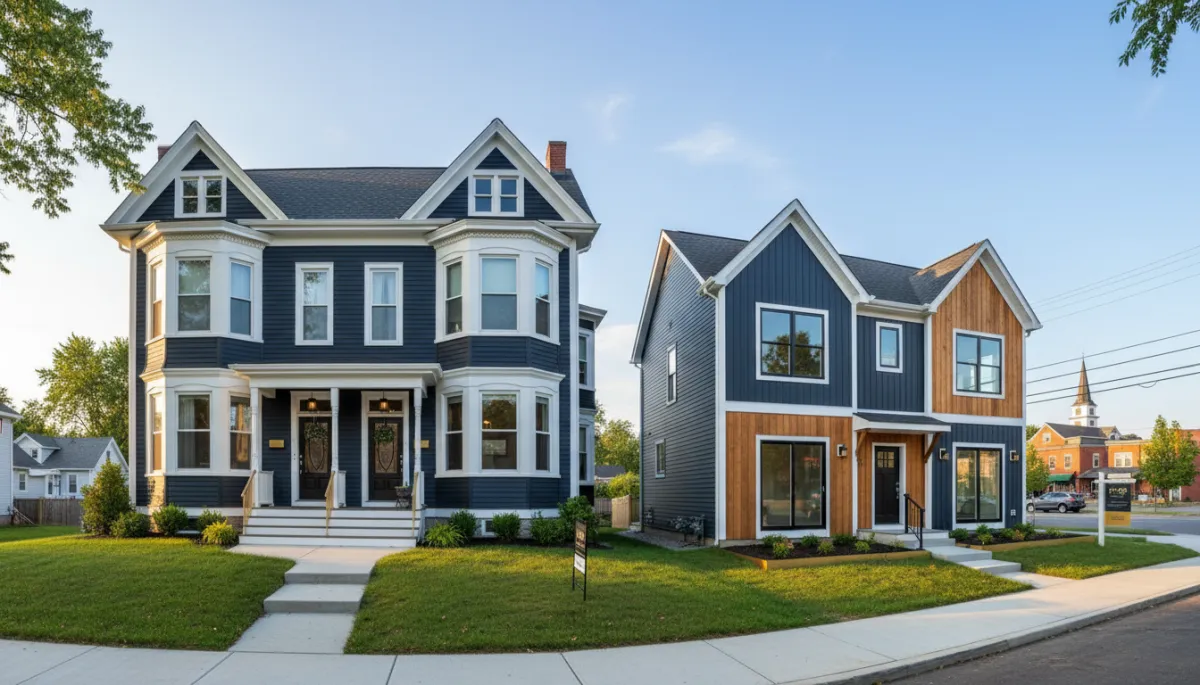
Updated multifamily homes in towns like Manchester and Windsor can pair stable rents with strong long‑term appreciation.
5. Multifamily Investing in CT: ~$450K Median, Financing, and Cash Flow
Multifamily properties are a cornerstone of Connecticut investing in 2026. Year‑to‑date, the median multifamily price is hovering around $450,000. In many cases, that could mean a well‑located duplex or small three‑family, depending on the town and condition. Compared with single‑family prices in the high $400s statewide, multifamily offers the advantage of multiple income streams on one roof.
Financing options typically include:
Conventional loans for 2–4 unit properties, often with slightly higher down payments than single‑family homes but still attractive terms for owner‑occupants and investors.
FHA or VA loans for eligible buyers who plan to live in one unit and rent the others—an excellent path for first‑time investors and fellow veterans.
Portfolio and commercial loans for larger buildings or investors scaling beyond four units.
With cap rates in that 5–8%+ band, a carefully underwritten multifamily property can generate solid cash flow, especially when you factor in today’s extremely low vacancy rates in nearby metros. The key is to underwrite conservatively, budget for maintenance on older New England housing stock, and lean on local insight about rents by neighborhood and unit type.
6. Single-Family vs. Multifamily: What Makes Sense in CT Today?
Both single‑family and multifamily investments can work in Connecticut—your choice depends on your goals and tolerance for management. Single‑family rentals often attract longer‑term tenants, sometimes families who treat the home like their own. They may offer slightly lower gross yields but can shine in terms of appreciation and resale flexibility, especially in desirable school districts across Tolland, Windham, New London, and Hartford Counties.
Multifamily properties, by contrast, spread risk across multiple units. If one tenant moves out, you still have other income coming in. In a market where homes sell in about nine days and at over 100% of asking price, both asset types benefit from strong demand, but multifamily may deliver more immediate cash flow, while single‑family can play a larger role in long‑term equity building.
7. Short-Term Rental Potential in Connecticut (Airbnb & VRBO)
Short‑term rentals remain an appealing niche in Connecticut, particularly in coastal communities, near casinos, and around colleges and hospitals. Investors are drawn to the possibility of higher nightly rates compared with long‑term leases. However, you’ll want to move carefully—local regulations vary by town, and some municipalities have introduced registration requirements, caps on the number of days, or zoning restrictions for non‑owner‑occupied rentals.
Before you underwrite a deal based on Airbnb income, work with a local agent like Melinda to confirm whether short‑term rentals are:
Allowed in that specific town and zoning district
Subject to licensing or inspection requirements
Limited to owner‑occupied properties or certain property types
In many cases, a hybrid approach—holding some units as long‑term rentals while designating one or two as furnished mid‑term or short‑term housing—can help balance income and risk.
8. Common Investor Mistakes in Connecticut’s Competitive Market
With inventory under two months and homes selling quickly, it’s easy to get swept up in the rush. Here are some of the most common missteps Melinda sees investors make in 2026:
Chasing deals without a clear strategy: Buying “whatever’s available” instead of focusing on a defined plan—such as house hacking, building a multifamily portfolio, or targeting specific school districts.
Underestimating rehab and maintenance: Many Connecticut properties are older and charming—but that charm can hide deferred maintenance. Skipping thorough inspections or realistic contractor bids can turn a good deal into a money pit.
Over‑optimistic rent projections: Even in a tight market, you’ll want to base your underwriting on current, verified rents in that specific neighborhood and building type, not the highest number you’ve heard.
Going it alone: In a state where properties can sell in nine days at 101% of list price, having an experienced local Realtor who knows how to structure competitive—but still smart—offers is a real advantage.
📌 Key Takeaway: The right deal in Connecticut isn’t just about price—it’s about strategy, condition, location, and execution.
9. Connecticut Real Estate Investing FAQ (2026)
Q1: Is 2026 still a good time to start investing in Connecticut real estate?
Yes—if you’re patient and data‑driven. Tight inventory and fast sales mean you’ll face competition, but they also signal strong demand and support for rents and values. With cap rates in the 5–8%+ range in many secondary markets and rental vacancies under 1% in Hartford and New Haven, investors who buy carefully and hold for the medium to long term can do very well.
Q2: How much should I budget for a multifamily property in 2026?
The statewide median for multifamily properties is around $450,000 year‑to‑date, but prices vary by county, town, and building condition. In some eastern Connecticut communities, you may find opportunities below that figure, while closer‑in suburbs or larger buildings will command more. Melinda can help you match your budget with realistic property types and neighborhoods.
Q3: Where should I focus if I want strong rental demand but lower entry prices than Hartford?
Towns like Manchester, Broad Brook, and Windsor are excellent starting points. They benefit from proximity to employment centers and major highways while often offering more approachable prices than the urban core. Eastern Connecticut counties—Tolland, Windham, and parts of New London—also provide a mix of affordability and steady demand when you choose the right micro‑locations.
Q4: Should I buy a single-family or a multifamily as my first investment?
It depends on your comfort level. A single‑family home can be easier to manage and may feel more familiar if you’re already a homeowner. A small multifamily, especially if you live in one unit, can accelerate your path to cash flow and equity. In Connecticut’s 2026 market, many first‑time investors are choosing duplexes or three‑families so they can offset their housing costs while building a portfolio.
Q5: How can a local Realtor actually help me as an investor?
In a fast‑moving market, you need more than online listings. A local Realtor like Melinda Walencewicz, eXp Realty, brings neighborhood‑level rent knowledge, early access to upcoming listings, realistic rehab and resale expectations, and negotiation strategies tailored to Connecticut norms. As a US Navy veteran serving eastern Connecticut, Melinda also understands how to structure purchases for VA buyers and house hackers who want to live in one unit and rent the rest.
10. Sources and Market References
Federal Reserve Economic Data (FRED) – Connecticut Housing & Rental Data
https://fred.stlouisfed.org/
Provides reliable economic indicators, including housing market trends, rental vacancy rates, and other data used to analyze Connecticut real estate conditions.YCharts – Connecticut Rental Vacancy Rate
https://ycharts.com/
Offers current and historical rental vacancy rate data for Connecticut, helping investors evaluate rental demand and market strength.Connecticut REALTORS®
https://www.ctrealtors.com/
Publishes statewide housing statistics, pricing trends, inventory levels, and market reports for Connecticut residential real estate.Connecticut Office of the State Comptroller – Economic Updates
https://osc.ct.gov/
Provides Connecticut economic reports covering housing supply, permitting activity, employment trends, and broader market conditions that influence real estate investing.SmartMLS
https://www.smartmls.com/
The primary Connecticut Multiple Listing Service, offering current market data on home prices, inventory, multifamily sales, and local real estate trends.
Ready to Explore Connecticut Investment Opportunities?
Whether you’re eyeing your first duplex in Manchester, a portfolio of single‑family rentals in Tolland County, or a value‑add multifamily near Hartford, you don’t have to navigate this competitive market alone. With a strong understanding of Connecticut’s 2026 data, local regulations, and neighborhood‑by‑neighborhood dynamics, Melinda Walencewicz can help you move from research to action with clarity and confidence.
Reach out to me today! Call me at 860-784-7214 for a free consultation. Never too busy for you to be my #1 client!