











Connecticut Homeowner Guide to Beating Summer Humidity Basement HVAC and Moisture Control
Home Maintenance, Connecticut Home Humidity Control
Connecticut Homeowner Guide to Beating Summer Humidity Basement HVAC and Moisture Control
Connecticut summers bring heat and humidity, and your home’s biggest enemy isn’t the heat—it’s the moisture that creeps into basements, walls, and attics, quietly threatening your comfort, your air quality, and the long term value of your property.
Why Connecticut humidity is uniquely damaging to homes
Our state’s mix of coastal air, rivers, and lush greenery gives Connecticut its beauty—but it also means heavy, lingering humidity from late spring through early fall. Warm, moist air seeps into cool spaces like basements and crawlspaces, where it condenses on concrete, metal, and wood. Over time, that repeated dampness can lead to mold, musty odors, peeling paint, rusted equipment, and even structural damage to framing and floor joists.
Because many Connecticut homes are older and have partially finished or stone foundation basements, they are especially vulnerable. Add in summer thunderstorms, occasional flooding, and snowmelt in shoulder seasons, and you have a recipe for chronic moisture problems if you do not stay ahead of them with smart Connecticut home humidity control strategies tailored to our climate.
Basement moisture control the top priority for CT homeowners
If you only focus on one area this summer, make it your basement. Moisture that starts downstairs rarely stays there. It can move upward through the stack effect, carrying musty smells and mold spores into living spaces and bedrooms. A dry basement is the foundation of a healthy home and a strong resale value in 2026’s competitive CT market, where buyers are paying close attention to CT basement moisture 2026 inspection reports.
- Make sure gutters and downspouts move water at least 6 feet away from the foundation.
- Check for cracks or gaps in foundation walls and around utility penetrations; seal with appropriate masonry or polyurethane products.
- Store belongings on shelves or pallets, not directly on the floor, so you can spot moisture early.
Once bulk water is controlled, a properly sized dehumidifier and smart HVAC use finish the job, keeping relative humidity in the safer 30–50% range recommended by the U.S. Department of Energy and other experts.
HVAC tips for summer humidity management in CT
Your air conditioning system is one of your strongest allies against summer humidity, but only if it is working efficiently and correctly sized. An oversized unit cools the air quickly but does not run long enough to remove much moisture. That leaves the house cool but clammy—uncomfortable and potentially unhealthy for sensitive family members.
- Schedule annual maintenance before peak heat. Clean coils and proper refrigerant levels help the system dehumidify effectively, as the U.S. Department of Energy notes in its humidity control guidance.
- Change filters regularly—often monthly during heavy use—so air can flow freely across the coil and shed moisture efficiently.
- Use a smart thermostat to maintain a steady temperature and humidity setpoint, rather than big swings that stress the system and invite condensation.
Seal leaky ductwork, especially in unconditioned areas, so you are not pulling damp air from crawlspaces or attics into your living areas. During the muggiest days, keep windows and exterior doors closed; drawing in outdoor air may feel “fresh,” but in Connecticut’s July and August conditions, it often means extra moisture your HVAC now has to battle.
Dehumidifier selection and placement guide
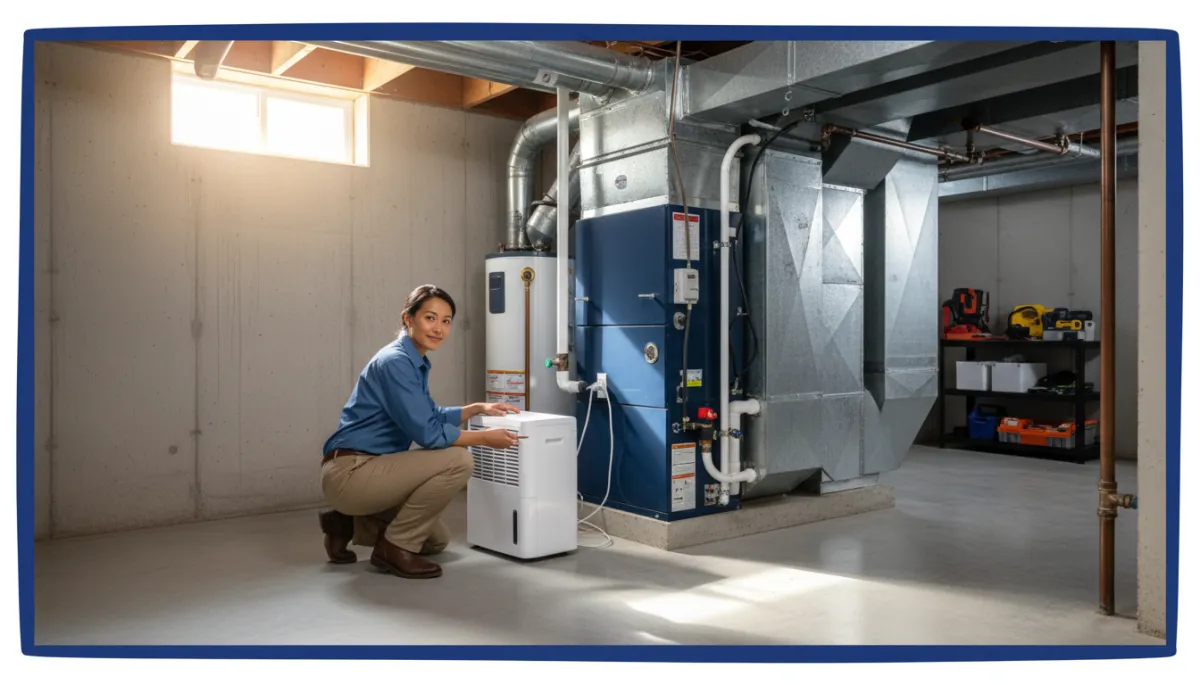
For most basements in our region, a dedicated dehumidifier is non negotiable. Look at capacity, drainage, temperature rating, and noise. For a typical Connecticut basement up to roughly 2,500 square feet, a 50 pint unit is often a smart choice, based on current 2026 testing from consumer and appliance review sites. Models like the Midea Cube 50 Pint, GoveeLife Smart 50 Pint, or Honeywell 50 Pint with pump have performed well in independent reviews for basement use.
- Choose a unit rated for cooler spaces if your basement runs on the chilly side; some Hisense and Midea models are built for low temperature operation.
- For convenience, consider a built in pump or a gravity hose draining to a floor drain or sump, so you are not constantly emptying buckets.
- If noise is a concern near finished living areas, look for quieter models such as Honeywell units that score well for low sound levels.
Place the dehumidifier near the center of the basement or where moisture is worst, with at least a foot of clearance around it for airflow. Keep doors between rooms open so air can circulate, and use a small fan if needed to move damp air toward the unit. Monitor humidity with an inexpensive hygrometer; adjust settings to keep readings in the 40–50% range for reliable mold prevention Connecticut homeowners can count on.
Warning signs of moisture damage to catch early
Moisture problems rarely appear overnight. They send warnings first—if you know what to watch for. Catching these signs early is one of the most protective summer humidity CT homeowner tips I can share, because early action is almost always cheaper than major remediation later.
- Musty or earthy odors in the basement, closets, or lower level bathrooms.
- Efflorescence—white, powdery deposits—on foundation walls or floors.
- Peeling paint, bubbling drywall, or warped baseboards along exterior walls.
- Condensation on windows or metal ductwork, especially in summer.
- Dark spots on wood, carpet, or ceiling tiles that may indicate mold growth.
If you see any of these, do not ignore them. Track where and when they appear, then address the source of moisture, not just the symptom on the surface.
Attic ventilation and its role in humidity control
It is easy to focus only on basements, but your attic is another critical moisture battleground. In a Connecticut summer, hot, humid air in an under ventilated attic can bake roofing materials, encourage mold on sheathing, and push heat down into living areas, forcing your AC to work harder and condense even more moisture on cool surfaces.
Proper attic ventilation combines soffit vents (intake) with ridge or gable vents (exhaust) to keep air moving. Make sure insulation is not blocking soffit vents, and consider adding baffles to maintain a clear airflow path. In some cases, a powered attic fan, installed by a qualified contractor, can help—though it must be done carefully so it does not pull conditioned air from the house. A well ventilated attic supports overall Connecticut home humidity control by reducing trapped heat and moisture above your living spaces.
Mold prevention in Connecticut homes
Mold spores are everywhere, but they only become a problem when given moisture and time. The EPA and DOE both emphasize that controlling moisture is the single most effective mold prevention strategy. Keep humidity in check, dry wet materials within 24–48 hours, and you dramatically reduce your risk of mold colonies taking hold behind walls or under flooring.
- Run exhaust fans during and after showers and cooking, vented to the outdoors—not into the attic.
- Fix plumbing leaks promptly, even “small” ones under sinks or behind toilets.
- Avoid carpeting directly on slab basements; choose hard surfaces with area rugs that can be cleaned and dried.
If you already see visible mold, protect your health. For small areas on non porous surfaces, careful cleaning with appropriate products may be reasonable. For larger areas, or if anyone in the home has asthma or allergies, a professional evaluation is the safest route.
How moisture control protects and increases your home’s value
Buyers in 2026 are more informed than ever. Home inspectors are using moisture meters, thermal imaging, and detailed reports. A basement that smells musty or shows staining can send buyers running—or lead to steep price negotiations. On the other hand, a clean, dry basement with a properly installed dehumidifier, tidy sump pump, and documented maintenance is a selling point that supports your asking price.
Strong moisture management also protects finishes and systems you have already invested in: flooring, drywall, HVAC equipment, and stored belongings. By taking moisture seriously today, you are not just protecting your family’s health—you are preserving and potentially increasing the long term value of one of your largest assets, your Connecticut home.
When to call a professional vs DIY
Many humidity and moisture steps are DIY friendly: running a dehumidifier, cleaning gutters, using a hygrometer, and changing HVAC filters. These summer humidity CT homeowner tips are a great starting point. But there are times when calling in a professional protects you from bigger headaches and hidden risks.
- Persistent standing water, repeated flooding, or foundation wall bowing should be evaluated by a licensed contractor or structural engineer.
- Widespread or recurring mold, especially if it covers more than about 10 square feet, calls for a mold remediation specialist.
- HVAC sizing, ductwork redesign, or whole house dehumidification should be handled by a qualified HVAC contractor familiar with Connecticut’s climate.
As your local real estate resource, I can also connect you with trusted professionals and help you prioritize which moisture control projects will matter most when it is time to sell or refinance.
Call me at 860-985-4363 or visit melindatherealtor.com for a free consultation. Never too busy for you to be my #1 client.
Connecticut home humidity and moisture FAQ
Q: What indoor humidity level should I aim for in a Connecticut home?
A: Most experts, including the U.S. Department of Energy, recommend keeping indoor relative humidity between about 30% and 50%. In summer, many CT homeowners find 40–50% comfortable and effective for limiting mold and dust mites while still feeling good on the skin.
Q: Do I need a dehumidifier if I already have central air conditioning?
A: Often, yes—especially if you have a basement. Air conditioning helps, but it is designed primarily for temperature control. Basements are cooler and may not get enough airflow for the AC to remove all the moisture there. A dedicated basement dehumidifier is an important layer of protection for Connecticut home humidity control.
Q: How can I tell if my basement humidity is too high?
A: A hygrometer is the most reliable tool and costs very little. Readings above 60% indicate elevated risk for mold and corrosion. Even without a gauge, signs like musty smells, condensation on pipes, or sticky air are clues that moisture levels are too high and action is needed.
Q: Will moisture problems hurt my home’s resale value in 2026?
A: They can. Inspectors and buyers are cautious about CT basement moisture 2026 issues. Visible staining, active leaks, or mold reports can reduce your pool of buyers or lead to lower offers. Proactive moisture control, documentation of repairs, and clean inspection reports help protect your equity.
Q: Are houseplants or moisture absorbers enough to control humidity?
A: Houseplants and desiccant products can help in small, enclosed spaces like closets, but they are not a substitute for proper drainage, ventilation, HVAC care, and a quality dehumidifier. Think of them as small helpers, not your primary defense.
Sources
- U.S. Department of Energy – “How to Control Humidity in Your Home” and “Humidity Control” guidance (energy.gov).
- U.S. Environmental Protection Agency – Mold and moisture control resources (epa.gov/mold).
- Family Handyman, HGTV, and Consumer home improvement articles on managing indoor humidity and basement dehumidifiers (2025–2026).