












Do You Pay Capital Gains Tax Selling a CT Home? 2026 Guide
Selling your Connecticut home can be exciting, but the tax implications might keep you up at night. The good news? Most homeowners won't owe capital gains tax when they sell their primary residence. Let me break down exactly when you'll owe taxes and when you won't.
Understanding Capital Gains Tax Basics
Capital gains tax applies when you sell an asset for more than you paid for it. For real estate, this means the difference between your home's sale price and its original purchase price (minus certain costs and improvements).
However, your primary residence gets special treatment under federal and Connecticut tax law. The government recognizes that housing isn't just an investment: it's where you live.

Federal Capital Gains Exclusion: Your First Line of Defense
The federal government offers a generous exclusion for primary residence sales. If you're single, you can exclude up to $250,000 in capital gains. Married couples filing jointly can exclude up to $500,000.
To qualify for this exclusion, you must meet the ownership and use test:
You owned the home for at least 2 of the last 5 years before selling
You used it as your primary residence for at least 2 of the last 5 years
These two years don't have to be consecutive, and the ownership and use periods don't have to overlap perfectly.
Connecticut State Capital Gains Tax Rules
Connecticut follows federal exclusion rules, which is great news for homeowners. If you qualify for the federal exclusion, you won't owe Connecticut state capital gains tax either.
However, if your gain exceeds the federal exclusion limits or you don't meet the ownership requirements, Connecticut will tax the excess at 7% as ordinary income.
For example, if you're single and your gain is $300,000, you'd exclude $250,000 federally and pay Connecticut's 7% tax on the remaining $50,000.

Special Connecticut Exemption for Seniors
Connecticut offers an additional benefit that many homeowners don't know about. If you're 65 or older, you may qualify for a once-in-a-lifetime exemption with no dollar limit.
To qualify for this senior exemption, you must:
Be at least 65 years old at the time of sale
Have owned and used the home as your principal residence for 5 of the 8 years before selling
Not have used this exemption before
This exemption is particularly valuable for long-time Connecticut residents who've seen significant appreciation in their home values.
When You Will Owe Capital Gains Tax
You'll owe capital gains tax in Connecticut if:
You don't meet the primary residence requirements: If you owned the home for less than 2 of the last 5 years or didn't use it as your primary residence for 2 of the last 5 years, the entire gain is taxable.
Your gain exceeds exclusion limits: Single filers with gains over $250,000 or married couples with gains over $500,000 will owe tax on the excess amount.
You're selling investment property: Rental properties and second homes don't qualify for the primary residence exclusion.
You've used the exclusion recently: You can only use the federal exclusion once every two years.
Calculating Your Capital Gains
Your capital gain isn't simply the difference between what you paid and what you sold for. You can reduce your taxable gain by including:
Original purchase price
Major improvements (new roof, kitchen renovation, addition)
Selling costs (real estate commissions, legal fees, title insurance)
Closing costs from your original purchase
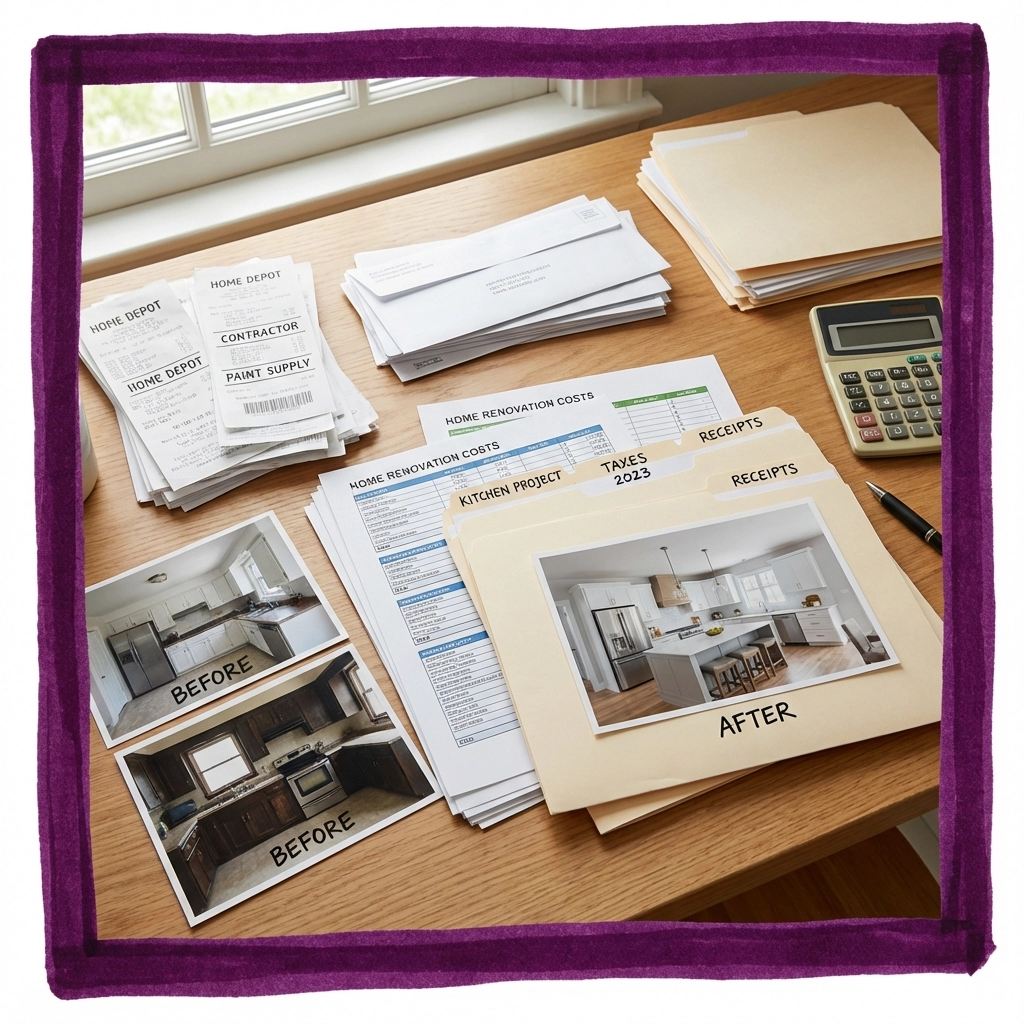
Keep detailed records of all improvements and costs. These can significantly reduce your taxable gain.

2026 Tax Updates to Consider
Tax laws can change, and it's worth noting that capital gains rates and exclusion amounts are subject to legislative updates. For 2026, the current exclusion amounts remain $250,000 for single filers and $500,000 for married couples filing jointly.
However, always consult with a tax professional for the most current information, especially if you're dealing with complex situations like partial use as a rental property or recent changes in marital status.
Common Scenarios Where Taxes Apply
Scenario 1: The Flipper
You bought a home 18 months ago, renovated it, and now want to sell. Since you didn't own it for 2 years, you won't qualify for the exclusion. Any gain will be taxable at federal capital gains rates plus Connecticut's 7%.
Scenario 2: The Downsizer
You bought your home 30 years ago for $150,000 and are selling it for $800,000. Your gain is $650,000. As a married couple, you can exclude $500,000, leaving $150,000 subject to tax.
Scenario 3: The Senior
At 67, you're selling the home you've lived in for 20 years. Even if your gain exceeds the regular exclusion limits, Connecticut's senior exemption could eliminate all state tax liability.
What About Inherited Property?
Inherited property receives a "stepped-up basis," meaning your cost basis is the home's fair market value when you inherited it, not what the original owner paid. This often eliminates or significantly reduces capital gains tax liability.
Record-Keeping Tips
To protect yourself and minimize taxes:
Keep all purchase documents
Document major improvements with receipts and photos
Save selling expense receipts
Track any periods when the home wasn't your primary residence
Maintain records for at least three years after filing your tax return
When to Consult a Professional
While many home sales are straightforward, consider consulting a tax professional if:
You've used part of your home as a rental or business
You're unsure about meeting the 2-year requirements
Your gain approaches or exceeds the exclusion limits
You're considering the senior exemption
You've made significant improvements but lack documentation
Planning Your Sale Strategically
If you're close to meeting the 2-year requirement, it might be worth waiting. Similarly, if you're approaching 65, the Connecticut senior exemption could be valuable.
Consider timing your sale to maximize tax benefits, especially if you're dealing with multiple properties or significant gains.
FAQ
Q: Do I need to report the sale even if I owe no taxes?
A: Generally, yes. You'll need to file Form 8949 and Schedule D with your federal return to report the sale and claim the exclusion.
Q: Can I use the exclusion multiple times?
A: Yes, but not within two years of your last use. You can use it every two years if you meet the ownership and use requirements each time.
Q: What if I'm divorced and selling the marital home?
A: The spouse who gets the house in the divorce can count both spouses' time living there toward the use requirement, as long as they owned it during that time.
Q: Do improvements have to be major to count?
A: Improvements must add value to your home, prolong its life, or adapt it to new uses. Regular maintenance doesn't count, but renovations, additions, and major systems updates do.
Q: Can I exclude gains if I sold due to job relocation?
A: If you don't meet the full 2-year requirement but sell due to work, health, or other qualifying reasons, you may be able to exclude a portion of the gain.
Call me at 860-985-4363 or visit melindatherealtor.com for a free consultation. Never too busy for you to be my #1 client.
Understanding capital gains tax doesn't have to be overwhelming. Most Connecticut homeowners selling their primary residence won't owe any capital gains tax at all. The key is knowing the rules and planning accordingly.
Sources
Internal Revenue Service (IRS) – Topic No. 701: Sale of Your Home
https://www.irs.gov/taxtopics/tc701Internal Revenue Service (IRS) – Publication 523: Selling Your Home
https://www.irs.gov/publications/p523Connecticut Department of Revenue Services – Capital Gains & Income Tax
https://portal.ct.gov/DRS/Individuals/Individual-Taxes/Capital-GainsConnecticut Department of Revenue Services – Income Tax Information
https://portal.ct.gov/DRS/Individuals/Individual-Taxes/Income-TaxNational Association of Realtors® – Tax Benefits of Homeownership
https://www.nar.realtor/taxes/tax-benefits-of-homeownership