











Can You Buy a Home in Connecticut With Remote Income?
The shift to remote work has opened doors for many professionals, allowing them to live anywhere while maintaining their careers. If you're considering buying a home in Connecticut while working remotely for an out-of-state employer, you're probably wondering if lenders will approve your mortgage application. The good news? Yes, you absolutely can buy a home in Connecticut with remote income, but there are specific requirements and documentation you'll need to meet.
Understanding Remote Work Mortgages
Remote work mortgages aren't a separate loan product, they're conventional mortgages with additional documentation requirements. Lenders treat remote income the same as traditional employment income, but they need extra proof that your remote position is stable and permanent. According to the National Association of Realtors, remote work arrangements became permanent for 35% of workers who shifted during the pandemic, making this a common scenario for lenders today (NAR, 2023).
The key difference lies in verification. While traditional employees can easily prove their work location matches their home address, remote workers must demonstrate their employer approves of their Connecticut residence and that their job security isn't tied to a specific geographic location (HUD Handbook 4000.1).

Required Documentation for Remote Workers
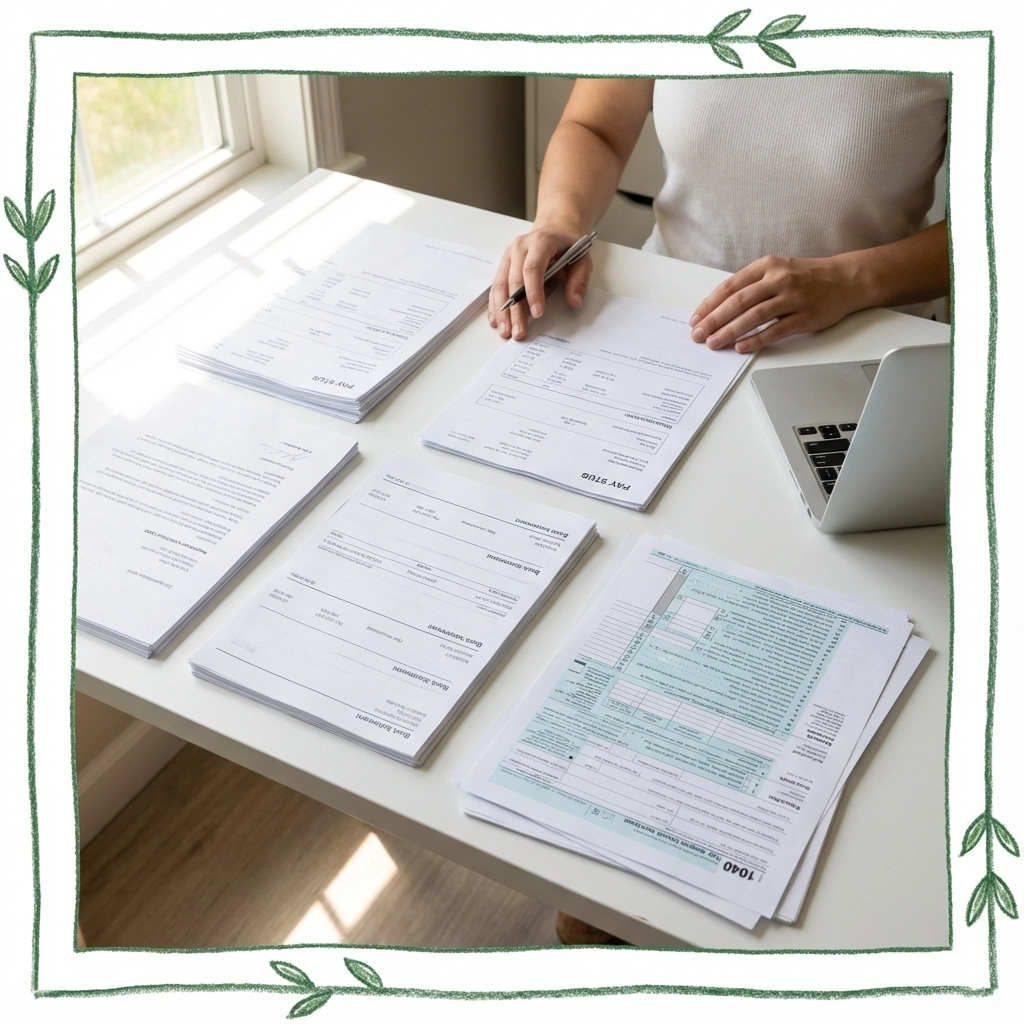
When applying for a mortgage in Connecticut as a remote worker, you'll need comprehensive documentation beyond standard mortgage requirements. Start with an employment verification letter from your employer that specifically states your remote work status is permanent, not temporary. This letter should confirm your job title, salary, start date, and that you're authorized to work from Connecticut indefinitely (see HUD Handbook 4000.1).
Your pay stubs from the past two months are crucial, showing consistent income deposits. Lenders want to see regular, predictable earnings that demonstrate job stability. Additionally, you'll need your W-2 forms from the past two years and tax returns to establish your income history and prove your remote work isn't a recent, temporary arrangement.
Bank statements for the past two to three months help verify that your employer's payments are being deposited regularly. If your employer pays through direct deposit, this creates a clear paper trail that lenders appreciate. Some lenders may also request a letter of explanation detailing how long you've been working remotely and why you're choosing to live in Connecticut.
Income Verification Challenges and Solutions
Remote workers often face unique income verification challenges that traditional employees don't encounter. If you're paid as a 1099 contractor rather than a W-2 employee, lenders will scrutinize your income more carefully. The U.S. Department of Housing and Urban Development reports that self-employed borrowers typically need two years of tax returns showing consistent or increasing income (HUD Handbook 4000.1).
For remote employees with variable pay structures, such as commission-based sales roles or consulting work, lenders calculate your qualifying income using a two-year average. If your income fluctuates seasonally, be prepared to explain these patterns and provide additional documentation showing the nature of your work cycle.
One common challenge is when remote workers haven't filed taxes in their new state yet. Connecticut requires income tax filing if you're a resident, but this doesn't affect your mortgage eligibility as long as you can demonstrate stable income and employment.
Connecticut-Specific Considerations
Connecticut doesn't impose any restrictions on remote workers purchasing homes, but there are state-specific factors to consider. The Connecticut Department of Revenue Services requires residents to file state income taxes, which means you'll need to factor this into your budget calculations when determining affordability.
Property taxes in Connecticut vary significantly by town, ranging from under 1% to over 3% of assessed value according to recent Connecticut Department of Revenue data (CT DRS). As a remote worker, you have the flexibility to choose any Connecticut town that fits your budget and lifestyle preferences, unlike traditional commuters who must consider proximity to their workplace.
Connecticut's cost of living is higher than the national average, with median home prices around $320,000 according to recent Zillow data (Zillow CT Home Values). Factor in potential state income tax obligations when calculating your debt-to-income ratio, as lenders will consider your total monthly obligations including estimated state taxes.
Debt-to-Income Requirements
Your debt-to-income ratio (DTI) remains the same whether you work remotely or in a traditional office setting. Most lenders prefer a DTI below 43%, though some government-backed loans allow higher ratios (CFPB). Calculate your DTI by dividing your total monthly debt payments by your gross monthly income.
For remote workers, lenders may be slightly more conservative with DTI calculations, particularly if your remote work arrangement is relatively new. Having a lower DTI can strengthen your application and potentially qualify you for better interest rates. Consider paying down existing debts before applying to improve your DTI ratio.

Down Payment and Credit Requirements
Remote work status doesn't affect down payment requirements, which vary by loan type. Conventional loans typically require 3-5% down, FHA loans require 3.5%, and VA loans (for qualifying veterans) require no down payment. However, having a larger down payment, typically 20% or more, can help offset any lender concerns about remote work arrangements (see HUD Handbook 4000.1).
Credit score requirements remain standard: 620 or higher for conventional loans, 580 for FHA loans, and 640 for VA loans in most cases. Some lenders may prefer higher credit scores from remote workers, particularly if the remote arrangement is new or if you're relocating from a different state.
Building strong credit before applying can significantly improve your mortgage terms. Pay down credit card balances, avoid opening new accounts, and ensure all payments are current before beginning your home search.
Working with Connecticut Lenders
Some lenders are more experienced with remote worker mortgages than others. Look for lenders who regularly work with remote employees and understand the documentation requirements. Credit unions and community banks in Connecticut often have more flexibility with unique situations than large national lenders.
When shopping for lenders, ask specifically about their experience with remote worker mortgages and what additional documentation they require. Some lenders have streamlined processes for remote workers, while others may treat it as a special circumstance requiring manual underwriting.
Get pre-approved before house hunting to understand exactly what you can afford and to demonstrate serious buyer status to sellers (CFPB). The pre-approval process will reveal any documentation gaps early, giving you time to address them before making an offer.
Frequently Asked Questions
Can I use remote income from multiple employers?
Yes, but you'll need employment verification letters from each employer and documentation showing the stability of each income source. Lenders prefer seeing at least two years of history with multiple income streams.
What if I just started working remotely?
If your remote arrangement is new but you've been with the same employer long-term, emphasize your employment history and job stability. A letter from your employer explaining the transition to remote work can help.
Do interest rates differ for remote workers?
No, remote work status doesn't directly affect your interest rate. Your credit score, down payment, and loan terms determine your rate (CFPB).
Can I buy in Connecticut if I've never lived there?
Absolutely. Many remote workers relocate to Connecticut for lifestyle reasons. Just be prepared for additional questions about your familiarity with the area and long-term plans.
What if my employer is based internationally?
International employers add complexity but don't disqualify you. You'll need additional documentation including proof of tax compliance and currency exchange considerations if paid in foreign currency.
Ready to start your Connecticut home buying journey as a remote worker? The process might require extra paperwork, but homeownership in the Constitution State is absolutely achievable with proper preparation and documentation.
Call me at 860-985-4363 or visit melindatherealtor.com for a free consultation. Never too busy for you to be my #1 client.
Sources
[1] https://www.nar.realtor/research-and-statistics/housing-statistics/2023-profile-of-home-buyers-and-sellers
[2] https://www.hud.gov/program_offices/housing/sfh/handbook_4000-1
[3] https://www.zillow.com/ct/home-values/
[4] https://portal.ct.gov/DRS/Property/Property-Tax
[5] https://www.consumerfinance.gov/ask-cfpb/what-is-a-debt-to-income-ratio-en-1791/